


What’s the right way to care for DEDON outdoor furniture? It depends on the material. Let’s talk about your options.
You just spec’d DEDON for a client, because they wanted furniture that would stay beautiful, comfortable, and functional for many years. Great choice!
Knowing how to care for DEDON outdoor furniture is an important part of your recommendation. One of the first things we look at is the material.
DEDON collections can combine DEDON Fiber, aluminum, stainless steel, teak, cushions, and performance fabrics. They look great together, but they don’t all need the same care.
For clients in Seattle, Portland, and the Pacific Northwest, there’s the obvious consideration: weather. Rain and moisture are simply part of outdoor living here.
The good news? Once you know the materials and what they need, DEDON care is pretty simple.
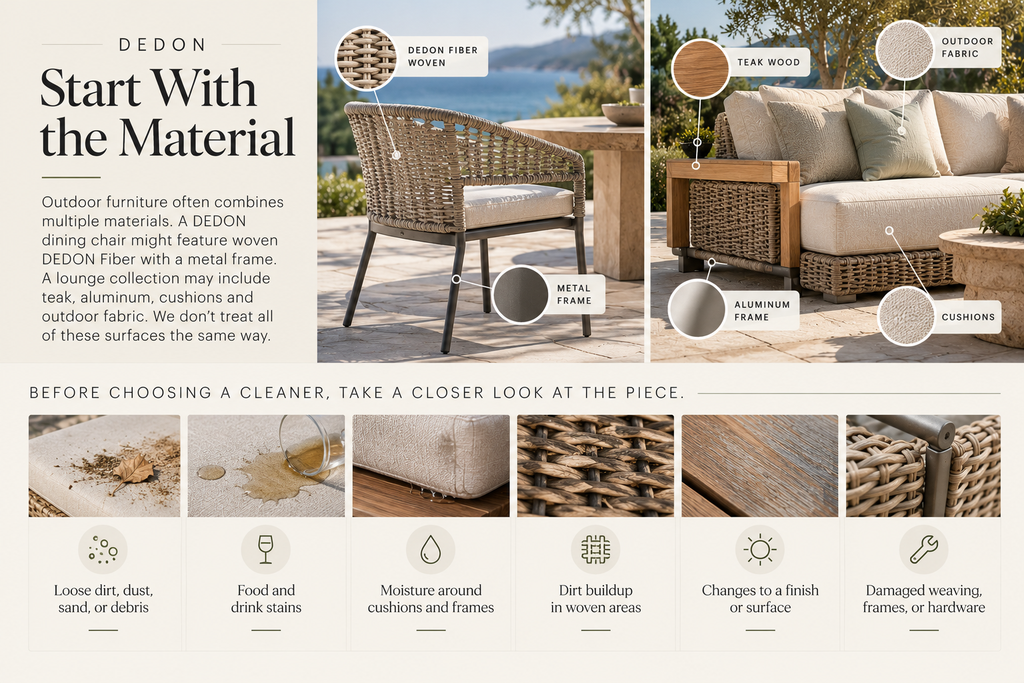
Start With the Material
Let’s say we’re looking at a DEDON dining chair together. You might have woven DEDON Fiber paired with a metal frame. Now imagine we’re looking at one of the DEDON lounge collections, with teak, aluminum, cushions, and outdoor fabric.
We wouldn’t tell you to treat all of those surfaces the same way.
Before choosing a cleaner or recommending a care routine to your client, take a closer look at the piece. Check for:
- Loose dirt, dust, sand, or debris
- Food and drink stains
- Moisture around cushions and frames
- Dirt buildup in woven areas
- Changes to a finish or surface
- Damaged weaving, frames, or hardware
Then check the manufacturer’s care instructions. You can also refer to our care and maintenance guidance when you’re planning the routine with your client. When several materials come together in one piece, the right approach for one surface may not be right for another.
It’s a small step, but it can save you from creating a maintenance problem later.
How Often Should DEDON Furniture Be Maintained?
You don’t need to put your client on a strict weekly deep-cleaning schedule.
Instead, we’d recommend keeping it simple. A quick look, a light wipe-down, removing dirt, and checking cushions after rain can catch small problems before they become bigger ones.
When you’re handing over a finished project, this is also a good opportunity to set expectations. A client who knows how to care for the furniture is much less likely to call you six months later with a preventable problem.
How to Clean DEDON Outdoor Furniture
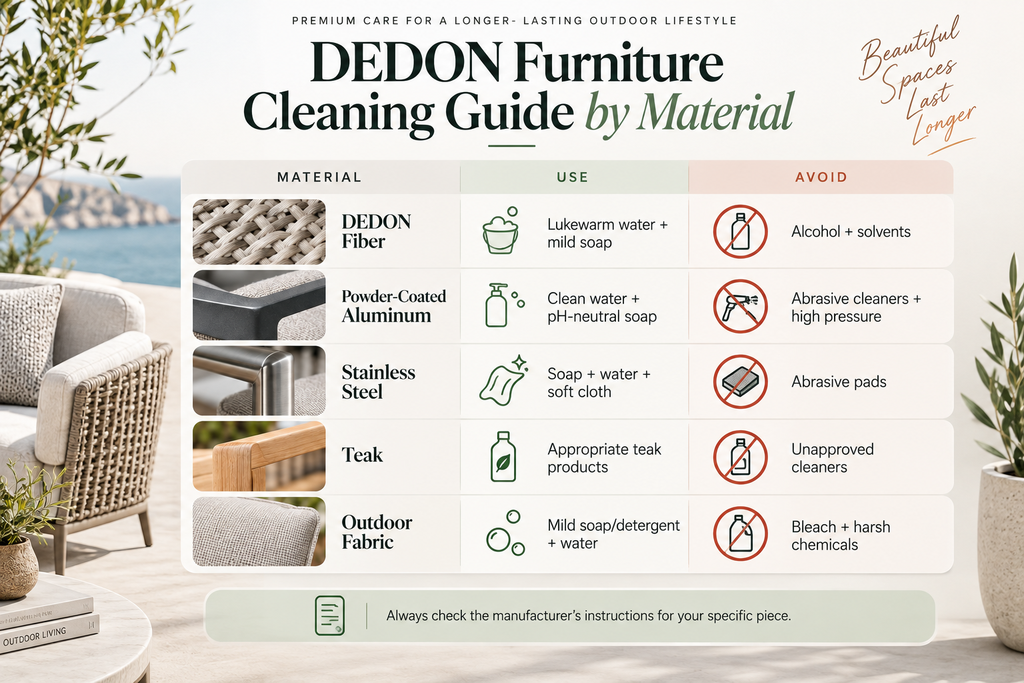
Once we know what materials we’re working with, the cleaning routine becomes much easier to explain.
DEDON Fiber
For DEDON Fiber, start with lukewarm water and a mild soap or gentle cleanser. Use a soft cloth or soft brush to remove dirt, then rinse thoroughly.
For a deeper clean, a pressure washer may be appropriate when used carefully on a low setting. We’d avoid alcohol and solvents, which can damage the material.
If the piece combines DEDON Fiber with another material, clean each surface according to its own care requirements.
Powder-Coated Aluminum
Powder-coated aluminum is fairly easy to maintain.
Use clean water and a pH-neutral or slightly alkaline soap, then rinse well. Avoid abrasive cleaners and high-pressure cleaning that could damage the finish.
This is one of those cases where you don’t need to overcomplicate things. Gentle cleaning is usually the better choice.
Stainless Steel
Stainless steel can be cleaned with soap, water, and a soft cloth. Rinse thoroughly afterward.
If you’re specifying furniture for a project closer to the Washington or Oregon coast, we’d pay a little more attention to salt and airborne contaminants. Regular cleaning may be more important when the furniture is exposed to coastal air.
Teak
Here’s where we’d have a slightly different conversation with your client.
Teak naturally changes over time. That warm golden color can gradually develop into a silver-gray patina, and that’s completely normal.
If your client wants to maintain the warmer appearance, teak-specific care products can help. If they like the weathered look, there’s no need to keep the teak looking brand new.
We’d talk about this before the furniture goes into the project. It’s much easier to set expectations when you’re selecting the material than after the furniture has started to change.
Outdoor Cushions and Performance Fabrics
Let’s talk about cushions too, especially for Pacific Northwest projects.
Moisture can stay underneath cushions or in areas where there isn’t much airflow. For acrylic fabrics, mild soap and water are generally appropriate. Polyester fabrics may call for mild detergent and water.
Start by removing loose dirt, then clean gently, rinse thoroughly, and let everything dry completely.
We’d also steer your client away from bleach, harsh chemicals, and abrasive cleaners unless the manufacturer specifically recommends them. And don’t put outdoor cushions in a dryer unless the care instructions say it’s appropriate.
The simplest advice is often the best: deal with stains early rather than letting them sit.
How to Protect DEDON Furniture From Pacific Northwest Weather
Now let’s talk about the part that matters when you’re specifying outdoor furniture here: the weather.
Weather-resistant doesn’t mean maintenance-free.
For projects in Seattle and Portland, rain, moisture, changing temperatures, and periods of strong summer sun all become part of how the furniture will perform.
When we’re looking at a collection with you in the showroom, we’d want to know where it’s going.
Is it going under a covered patio? Will it be completely exposed? Does the space get direct afternoon sun? Is it near the coast? Does water tend to collect anywhere after a storm?
Those details can influence which pieces make sense for the project.
What Should You Tell Your Client to Do After Heavy Rain?
This one is easy to overlook.
After significant rain, have your client check beneath the cushions and around areas where water can collect. If cushions or fabric are wet, give them time to dry completely.
We’d also have them check the covers. A wet cover sitting over damp furniture can trap moisture instead of protecting the piece.
The goal isn’t to keep every drop of rain away. It’s to keep moisture from staying trapped where it can create problems.
Should DEDON Furniture Be Covered?
Covers can be useful, particularly when furniture won’t be used for a while. They can reduce exposure to dirt, rain, and UV.
But we wouldn’t want your client to think that putting a cover on the furniture means maintenance is finished.
The furniture should be clean and dry before extended covering or storage. If pieces are staying outside year-round, breathable covers are a better choice because they allow moisture to escape.
When you’re specifying a collection, it’s worth considering how easy the care routine will be for your particular client. A cover should make ownership easier, not create another place for moisture to hide.
How Do You Prevent Moisture and Mildew?
This is especially important during the wetter months in the Pacific Northwest.
Ask your client to check beneath cushions, inside covered areas, and anywhere airflow is limited. If something stays damp, give it a chance to dry before covering or storing it.
And when you’re planning the layout, think about this too. A beautiful arrangement that leaves cushions sitting in trapped moisture may look perfect on installation day but create more maintenance work later.
That’s the kind of detail we like to catch before the furniture ever reaches the project.
Seasonal DEDON Furniture Care
You don’t need a complicated maintenance calendar for your client. Instead, think about what the furniture has been exposed to and what’s coming next.
Spring and Fall Cleaning
Spring and fall are good times for a more thorough cleaning and inspection.
Take a look at frames, finishes, hardware, woven areas, cushions, and fabrics. For homes around Seattle and Portland, these checks can be especially useful after months of wet weather.
If the furniture will be covered for an extended period, make sure everything is clean and completely dry first.
Preparing DEDON Cushions for Winter
If cushions are going into storage, clean and dry them completely before putting them away.
Whether every piece needs to be stored indoors depends on the material, climate, exposure, and manufacturer’s recommendations. Not every DEDON collection needs the same approach.
If you’re unsure what makes sense for a particular project, that’s exactly the kind of question we’d rather talk through with you before installation.

DEDON Furniture Care Mistakes to Avoid
When we’re sitting with a designer and talking through an outdoor project, these are some of the simplest mistakes we’d want to avoid:
- Using one cleaner on every material
- Choosing harsh or abrasive cleaning products
- Covering furniture while it’s still wet
- Leaving moisture trapped beneath cushions
- Assuming premium outdoor furniture needs no maintenance
- Ignoring manufacturer care instructions
None of these are complicated. Most come down to understanding what you’re specifying and making sure the client knows what to expect.
When Cleaning Isn’t Enough
Sometimes a piece needs more than routine cleaning.
If a stain persists, weaving is damaged, a finish has changed significantly, hardware is showing problems, or cushions need replacement, we’d stop experimenting with cleaning products.
Start with the manufacturer’s recommendations and warranty information. If you’re managing the project for a client, a furniture specialist can help determine whether the piece needs repair, replacement, or a more specific treatment.
That can save you from turning a small maintenance issue into an expensive callback.
DEDON Outdoor Furniture Care Checklist
If you’re handing care recommendations to a client, we’d keep them simple.
Regularly
- Remove dirt and debris
- Wipe surfaces as needed
- Check cushions and woven areas
- Look for early signs of damage
After heavy rain
- Check beneath cushions
- Remove standing or trapped moisture
- Allow cushions and fabrics to dry
- Make sure covers aren’t trapping moisture
Seasonally
- Deep clean the furniture
- Inspect frames, finishes, and hardware
- Check woven areas and cushions
- Clean and dry everything before extended covering or storage
If something looks wrong
- Identify the material first
- Check the manufacturer’s care instructions
- Avoid experimenting with harsh products
- Get professional guidance when needed
FAQs about How to Care for DEDON Outdoor Furniture
Can DEDON furniture stay outside year-round?
It depends on the material, climate, exposure, and the specific collection. A covered Seattle patio presents different conditions from furniture sitting fully exposed to rain, direct sun, or coastal air.
When you’re specifying DEDON, think about where the furniture will actually live and follow the manufacturer’s recommendations for that collection.
How long does DEDON outdoor furniture last?
Longevity depends on the material, environment, use, and maintenance. Regular cleaning, moisture management, and appropriate protection can help outdoor furniture hold up well over time.
What should I do if my DEDON furniture is damaged?
Don’t start experimenting with different cleaners or treatments. Check the manufacturer’s recommendations and warranty information, then speak with a furniture specialist if the damage needs professional attention.
Planning a New Outdoor Space in Seattle or Portland?
When you’re sitting with a client and selecting outdoor furniture, the right piece isn’t simply the one that looks beautiful in the showroom.
You’re thinking about how it will perform in the space, how comfortable it will be, how the client will use it, and how much maintenance they’re realistically willing to handle.
That’s why we like to talk through the project with you before you make the final selection.
If you’re considering DEDON for a patio, backyard, rooftop, or other outdoor space in Seattle, Portland, or elsewhere in the Pacific Northwest, come talk with us. We can help you compare materials, collections, and pieces based on the project, your client, and how the space will actually be used.
If project timing is a consideration, we can also help you look at quick-ship outdoor furniture that fits the project.
The goal isn’t simply to find a beautiful piece.
It’s to find one that makes sense for the entire project
Leave a Reply