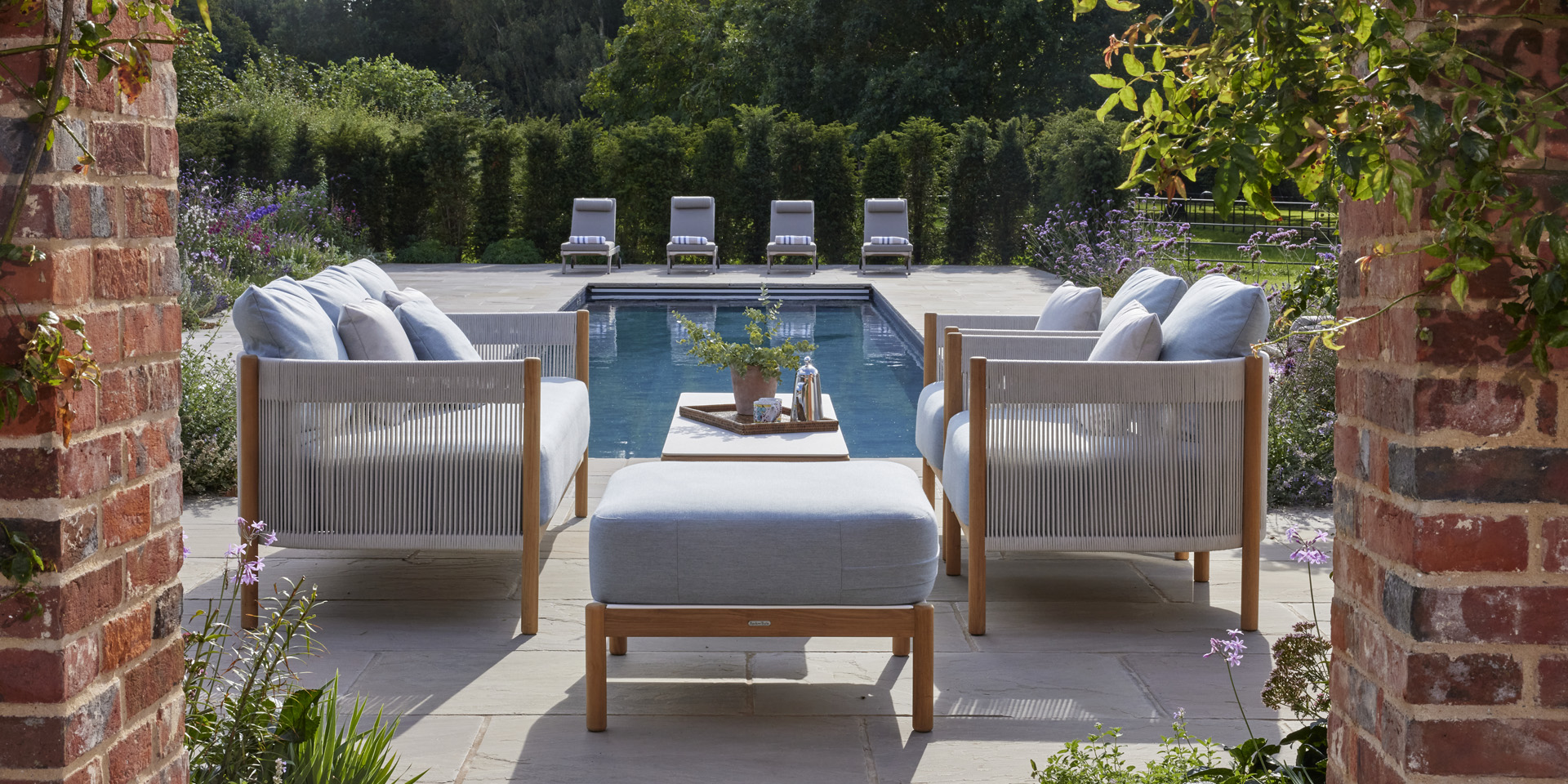
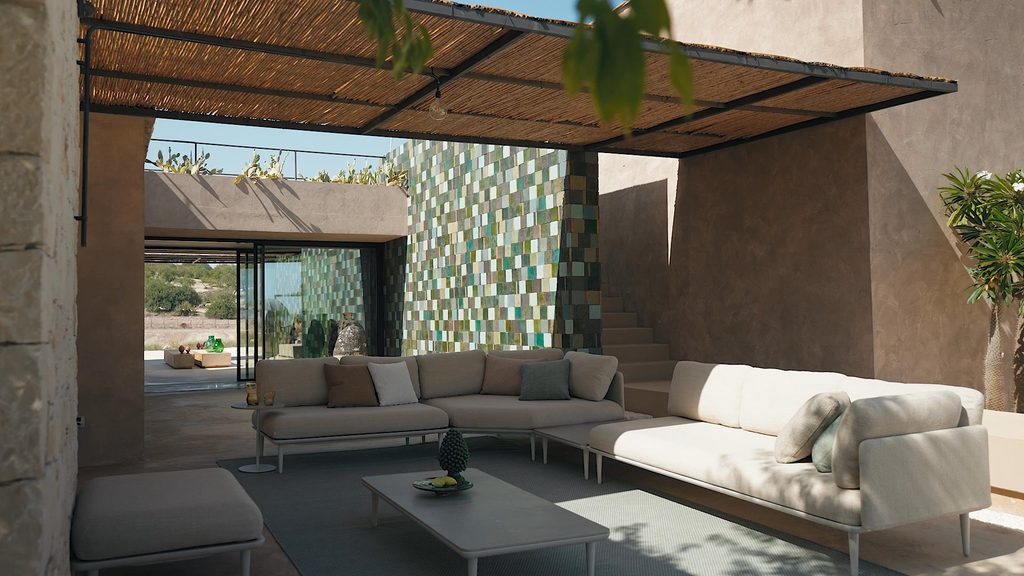
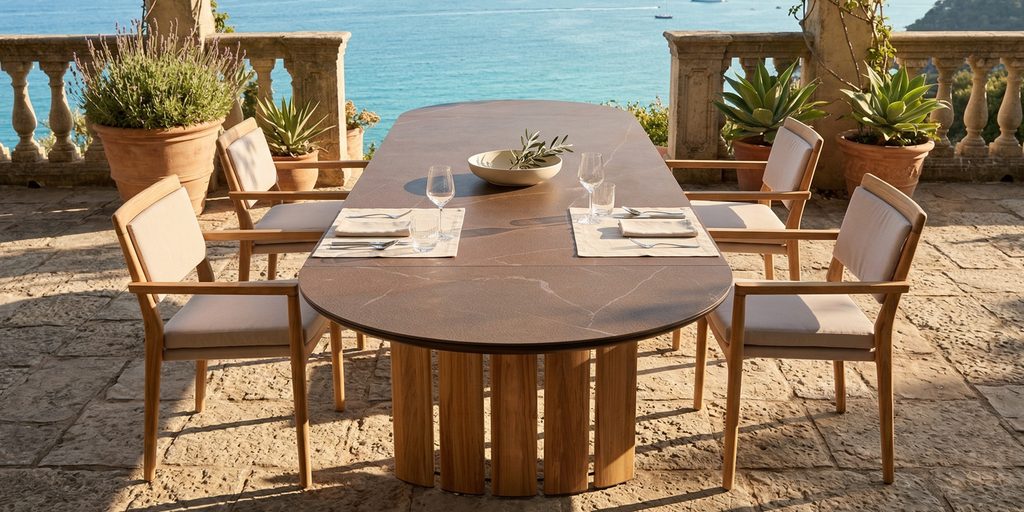
Where We’d Put DEDON CIRQL NU in a Northwest Project
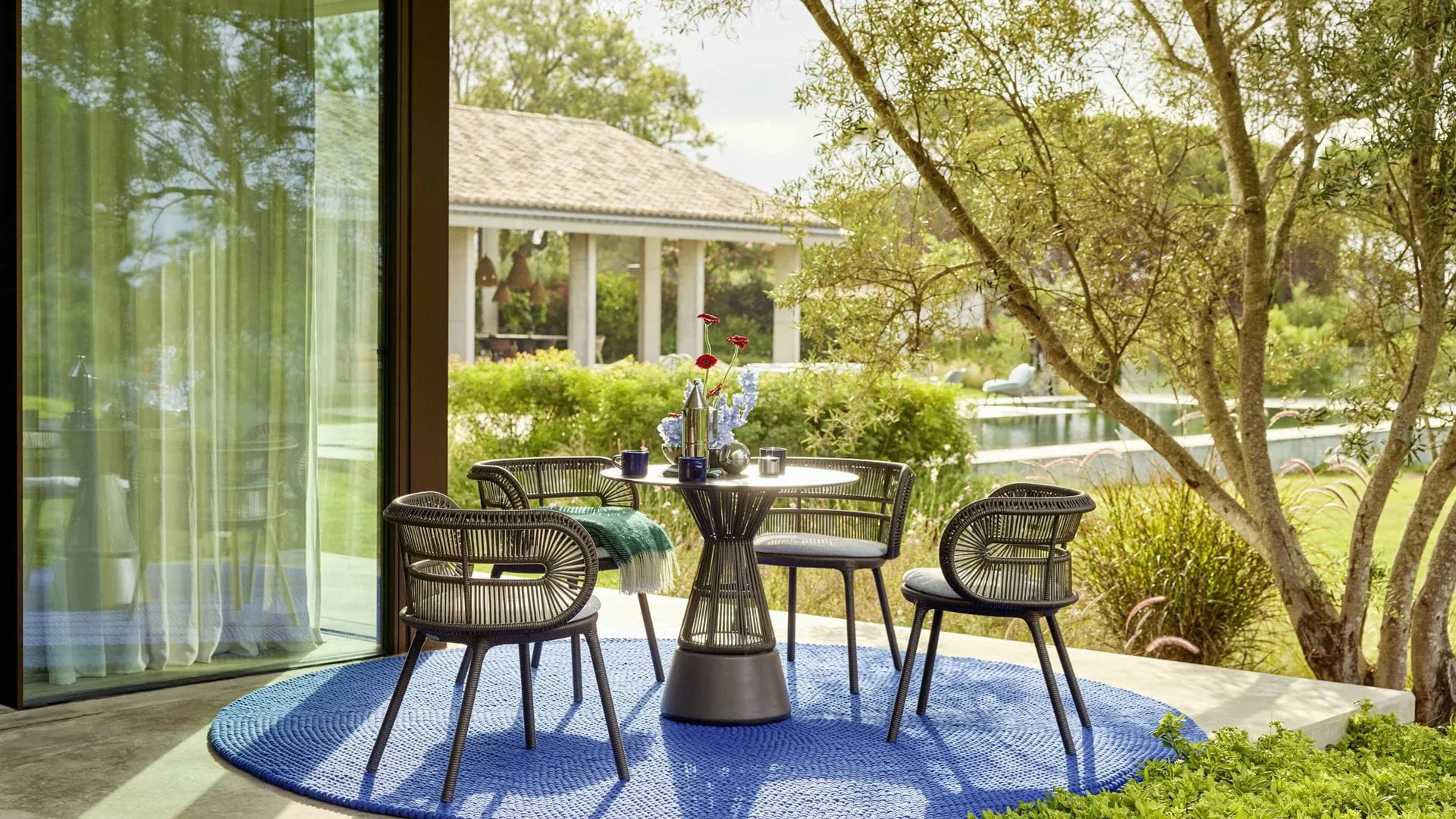
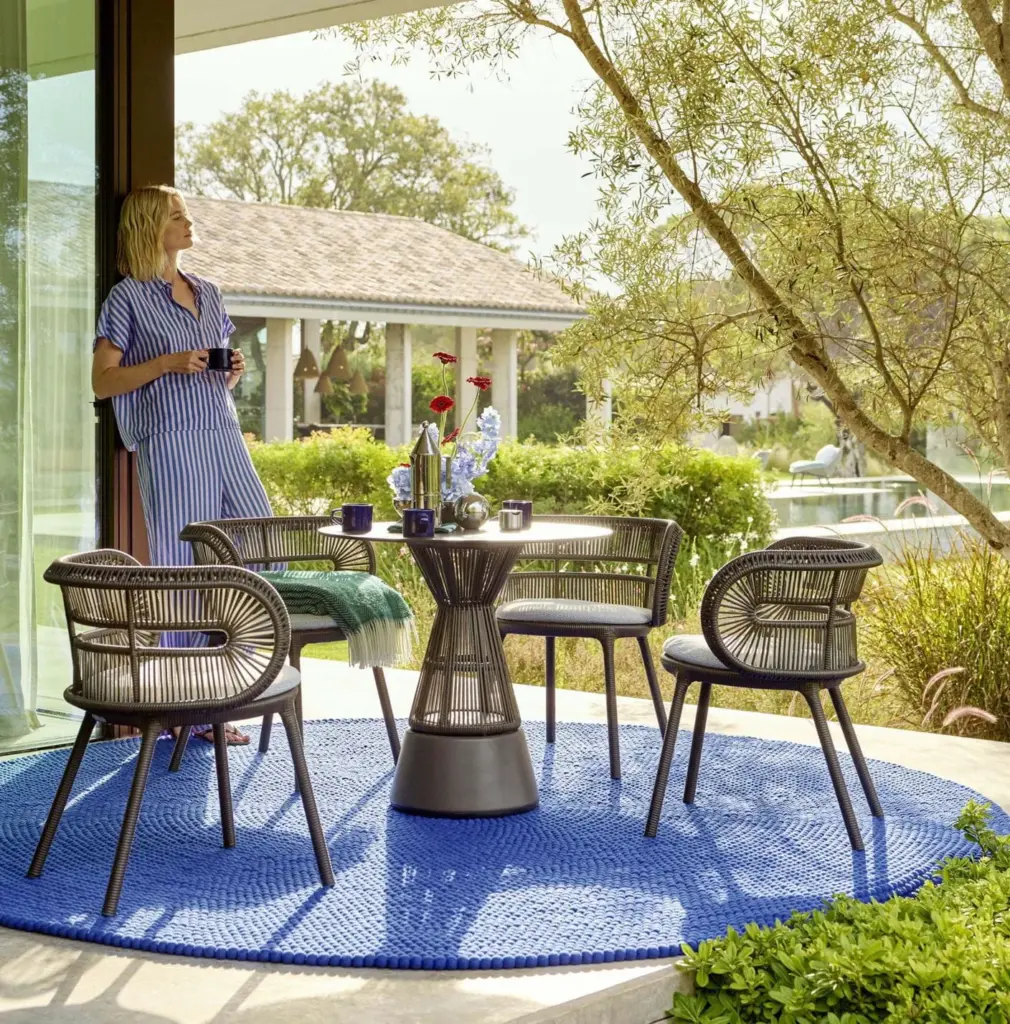
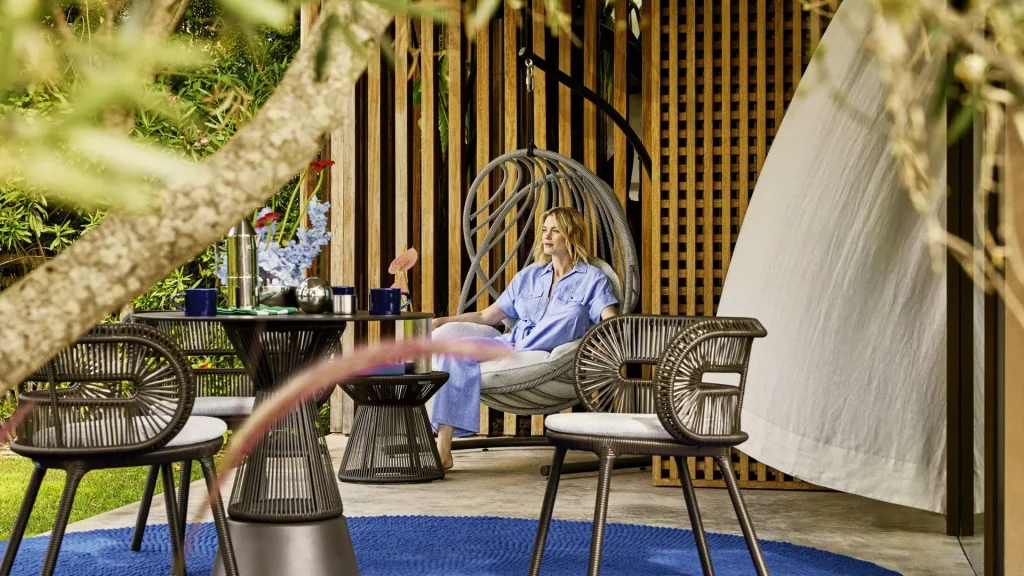
DEDON CIRQL NU is new for 2026, and we’ve been looking forward to this one. It’s a woven dining and lounge collection built on a fiber that carries two colors in a single strand.
You can read the launch details anywhere. Here’s what you’d hear from us across the showroom floor: what we noticed, and where we’d specify it around Seattle and Portland.
What We Noticed First
You can see through it. CIRQL NU has a semi-transparent weave, an open pattern that plays with light and shadow instead of sitting there like a solid block.
Then we looked at the fiber. It’s called Invert Fiber, and every strand fuses two colors and two fiber types together. Woven up, it has a 3D texture and a sheen that’s almost iridescent.
Walk around the chair and it changes on you. We think of this collection as a material first and a chair second.
The View Lot on the Water
Every waterfront client tells us the same thing: don’t block the view. On Lake Washington, the Sound, or Hood Canal, a tall solid chair back turns into a wall between the sofa and the water.
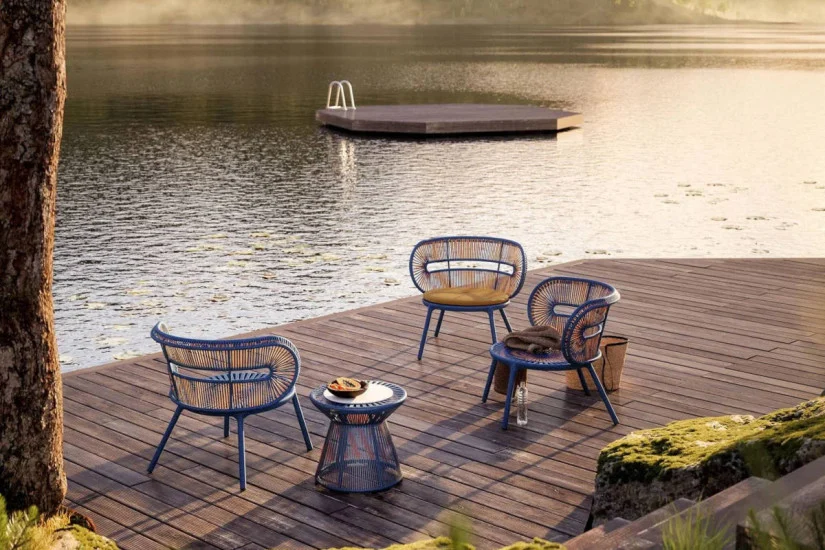
This is the first place we’d reach for CIRQL NU. The open weave lets the view come through, and the round shape sits lightly on a deck.
Salt air doesn’t worry us either. DEDON’s fiber stands up to saltwater, UV, and big temperature swings without cracking or fading. That puts the San Juans and the Oregon coast on the list too.
The Terrace Under a Gray Sky
Let’s be honest about our light. For a good part of the year it’s soft, flat, and gray, and flat light can turn woven furniture into one dull tone.
A two-color strand gives the eye something to do. The color shifts with the angle and the time of day, and we think that’s a real advantage up here.
Even the colorways take their names from the sky: Invert Twilight, Invert Nightfall, and Invert Sunrise. Don’t choose from a screen. Look at the fiber outside, in our light, before you commit a palette.
The Rooftop Where Every Foot Counts
South Lake Union, the Pearl, a condo terrace in Bellevue. The plan is tight, and the furniture has to work without crowding it.
The CIRQL NU lounge chair runs 24.5 inches wide and 31 inches deep. Add the footstool and a side table, and you’ve built a real lounge corner in a small footprint. The frames are powder-coated aluminum, so the pieces move when your client rearranges for a party.
The open weave helps here too. Furniture you can see through makes a small terrace feel bigger.
The Restaurant Patio and the Hotel Courtyard
For hospitality work, we’d start with the armchair and the bistro table. The armchair sits at dining height with an 18-inch seat, and it comes with or without a central base.
A restaurant patio is hard duty: sun, rain, and a full house every Friday. Care stays simple. A soft cloth or brush, warm water, and a gentle cleanser do the job, and staff should wipe up wine and citrus right away.
It also gives a patio a signature. Guests notice a chair that shifts color as they walk to the table.
The Pool Deck and the Hot Tub Corner
Chlorine is tough on outdoor materials, and Northwest clients love a hot tub. DEDON’s fiber resists chlorine, so CIRQL NU can sit close to the water.
We’d set a pair of lounge chairs with footstools beside the pool and a side table between them. Add seat cushions if your client wants them. They’re optional, and they come in DEDON’s outdoor fabrics.
Our Take: Use It as the Accent
CIRQL NU doesn’t need to furnish the whole terrace. It’s the piece that gives a quiet plan some personality.
Try two lounge chairs across from a simple sofa, or the armchairs around a teak dining table. Let the fiber be the pattern in the space, the way you’d use one great textile indoors.
The Short Version for Your Spec Sheet
Pieces: armchair, lounge chair, footstool, side table, bistro table
Bases: armchair and lounge chair come with or without a central base
Armchair: 18-inch seat height, 29.75 inches high overall
Lounge chair: 24.5 W x 31 D x 30 H inches, with a 15.5-inch seat height
Frame: powder-coated aluminum
Fiber: Invert Fiber in Twilight, Nightfall, or Sunrise
Cushions: optional
Let’s Look at DEDON CIRQL NU Together
Bring us the project. Tell us about the site, the view, and the client, and we’ll tell you where DEDON CIRQL NU fits. If something else across our 20-plus brands fits better, we’ll tell you that too.
Design professionals get true wholesale net pricing with no minimum order through our trade program.
Invert Fiber is the woven material behind CIRQL NU. Each strand fuses two colors and two fiber types, so the weave has a 3D texture and a sheen that shifts as you move around it.
CIRQL NU has an armchair, a lounge chair, a footstool, a side table, and a bistro table. The armchair and lounge chair come with or without a central base.
What colors does CIRQL NU come in?
CIRQL NU comes in three colorways: Invert Twilight, Invert Nightfall, and Invert Sunrise. Each one carries two tones in every strand, so see a sample in daylight before you choose.
Can CIRQL NU stay outside through a Northwest winter?
Yes. DEDON’s fiber handles UV, saltwater, chlorine, and big temperature swings without cracking or fading. We’d bring the cushions in or cover them for the wet months.
How do you clean CIRQL NU?
Use a soft cloth or brush with warm water, and add a gentle cleanser if you need it. Skip alcohol and solvents. DEDON’s full care guide is on our care and maintenance page.
Where can I find DEDON in Seattle or Portland?
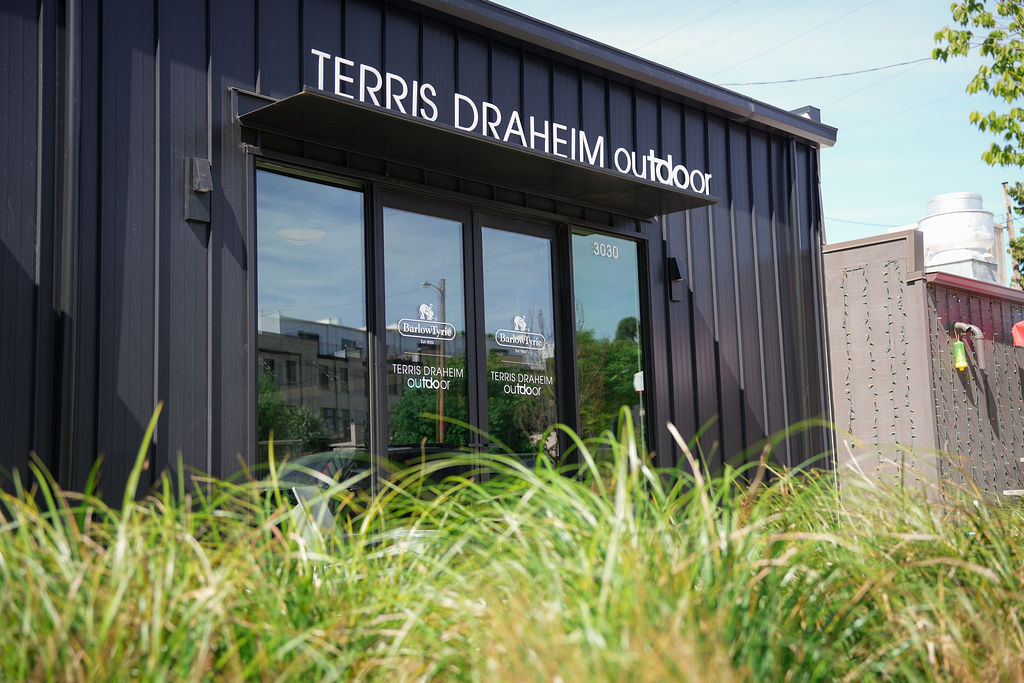
Right here. Visit Terris Draheim Outdoor at 5616 6th Avenue South in Seattle or 3030 NW Nicolai St. in Portland, or email outdoor@terrisdraheim.com.
Want to Learn More About DEDON CIRQL NU?
How Two Colors End Up in One Strand
The process is co-extrusion. Two materials feed through the same opening together and come out as a single strand. That’s how Invert Fiber carries both colors at once.
Who DEDON Is
DEDON is a German outdoor furniture maker that’s been at it since 1990. The company makes its fiber in Germany and weaves every piece by hand on Cebu Island in the Philippines. It’s one of more than 20 brands we carry.
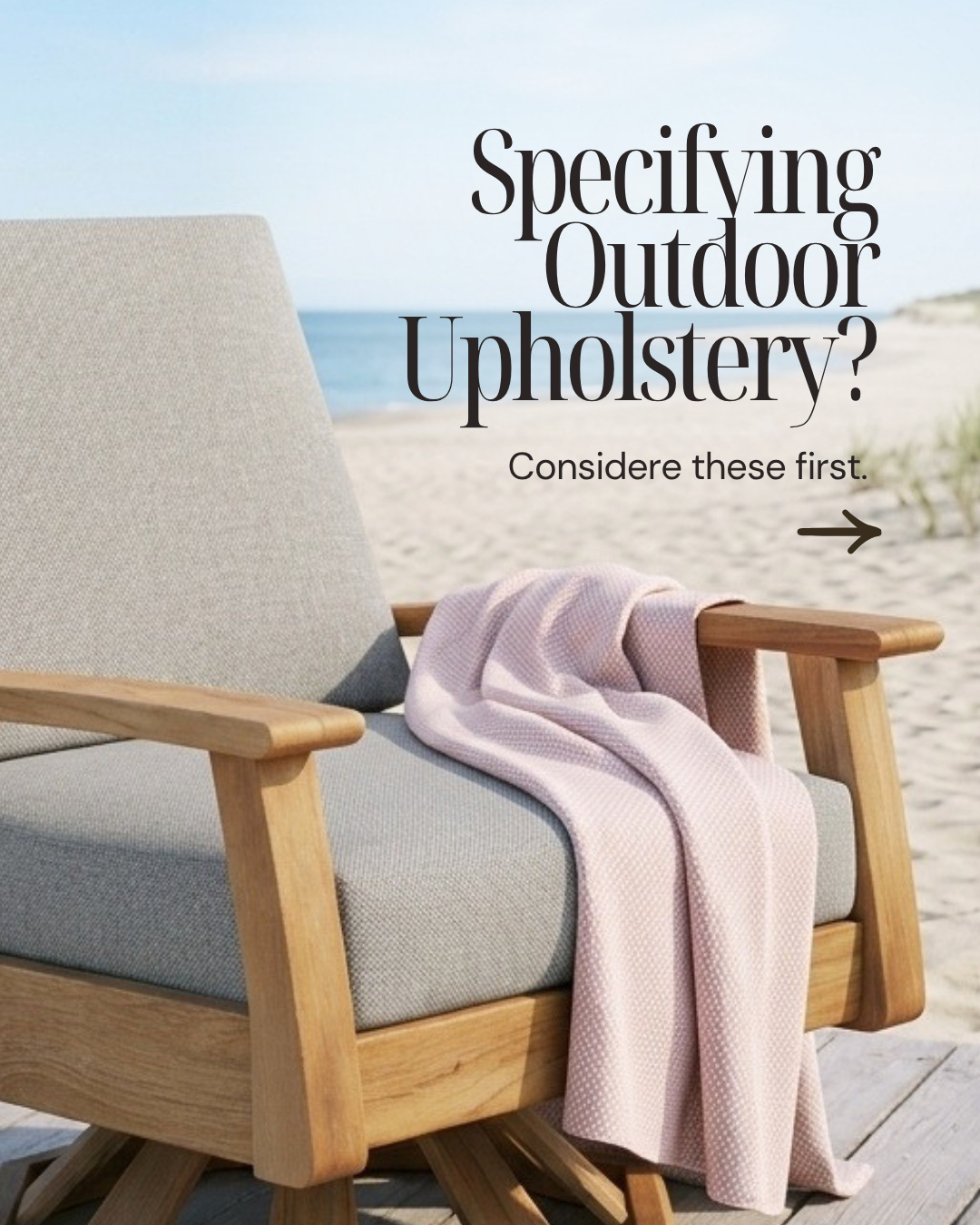
Color is the fun part of an outdoor upholstery spec. It’s also the last decision you should make.
The right fabric and cushion depend on where the furniture lives and who sits on it: sun exposure, moisture, maintenance, and traffic. Settle those four, and the color conversation gets easy. Skip them, and the prettiest swatch in the deck becomes next summer’s phone call.
Here’s how we walk designers and architects through it, plus a checklist to keep at your desk.
“Outdoor” on the Label Is Where the Questions Start
“Outdoor fabric” is a category, not a specification. Two textiles can both carry the word and behave nothing alike after one season.
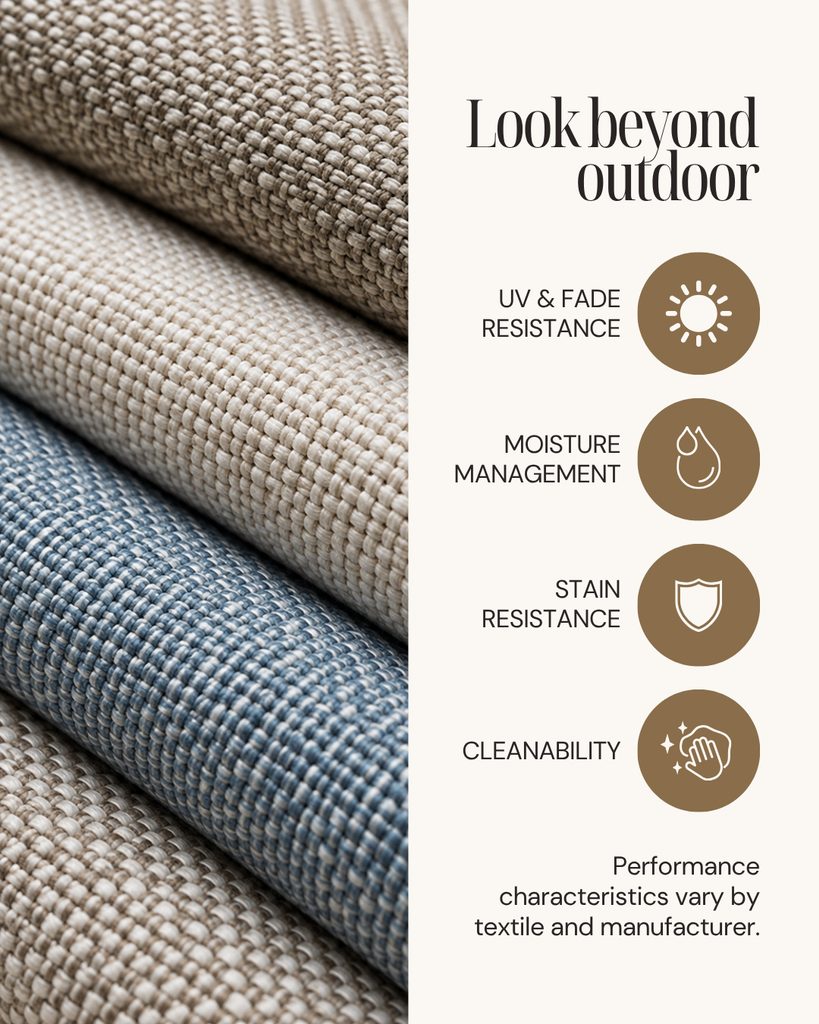
Look past the label to four things:
UV and fade resistance. How well the color holds in direct sun.
Moisture management. How the fabric and cushion handle water, and how fast they dry.
Stain resistance. How well the fabric shrugs off a spill in the first place.
Cleanability. What it takes to get a stain out once it’s in.
Performance varies by textile and by manufacturer. So the useful question isn’t “is it outdoor?” It’s “outdoor where, and for whom?”
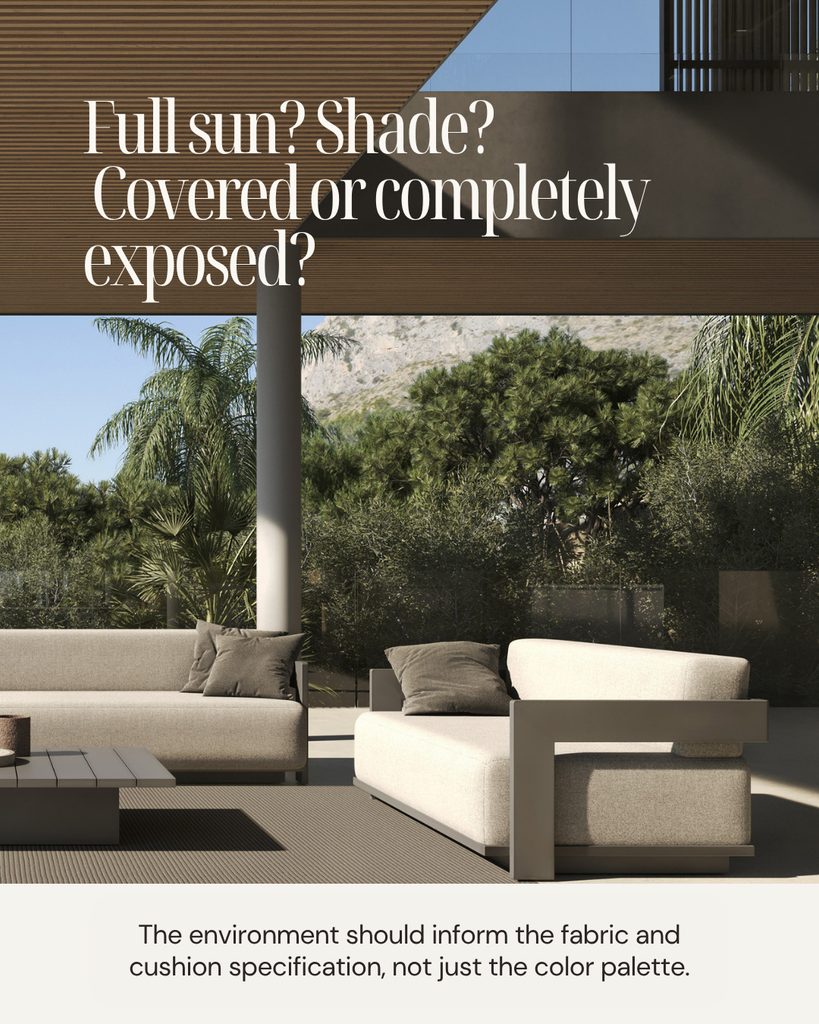
Start With the Sky: Full Sun, Shade, Covered, or Exposed
Stand on the site before you open a fabric book. Where does the sun land at 3 p.m.? What’s overhead, and what blows in sideways?
Full Sun Asks the Most of Color
Sun fades dye. The fabrics that hold color best are solution-dyed, which means the pigment goes into the liquid polymer before it ever becomes a fiber. The color runs all the way through, like a carrot, instead of sitting on the surface like a radish.
The test standards show how far apart indoor and outdoor are. The Association for Contract Textiles sets its indoor upholstery lightfastness guideline at 40 hours of light exposure. Its outdoor upholstery guideline calls for 1,000 hours.
One caution from ACT itself: test hours don’t convert to hours in the field. Use the numbers to compare fabrics. Use the site to make the call.
Shade and Cover Change the Problem
Shade is kind to color and hard on drying. A cushion under a deep overhang or a tree canopy stays damp longer, and even a weather-ready fabric can mildew if it sits wet.
Covered doesn’t mean protected, either. A roofed dining terrace still gets wind-driven rain, morning moisture, and temperature swings. In the Northwest, plan for that even when the drawings show a roof.
The Fabric Is Half the Spec. The Cushion Is the Other Half.
A swatch tells you nothing about what’s inside the cushion. What’s inside decides whether your client sits down dry the morning after it rains.
Ask about the fill first. Quick-dry foam has an open, net-like cell structure that lets water run through instead of staying trapped. That’s the difference between a cushion that drains and a cushion that holds a grudge.
Then ask how the water gets out. Mesh panels on the underside help a cushion drain, and vents help air move through it. Check the small parts too, because thread and zippers need UV resistance as much as the fabric does.
One more thing. Outdoor fabric resists water, and it still gets wet. For a fully exposed site, add covers to the spec.
We offer custom-made covers that are waterproof on top and breathable on the sides, so cushions stay dry and still get air.
Then Ask Who’s Sitting on It
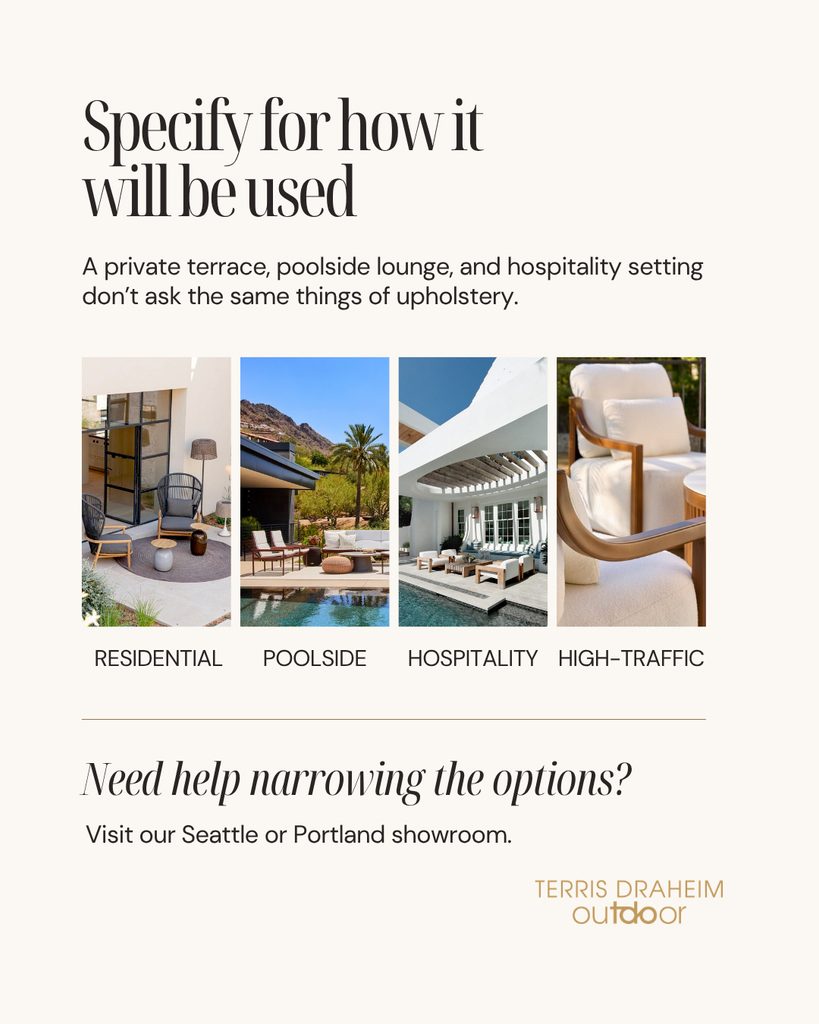
A private terrace, a poolside lounge, and a hotel courtyard don’t ask the same things of upholstery.
Residential
A family terrace usually has the gentlest traffic and the least predictable care. Be honest about who will bring the cushions in before a storm. If the answer is nobody, specify for nobody.
Poolside
Pool water adds chemistry. Chlorine fades dye through a chemical reaction that’s separate from sun fading, so a fabric with strong UV numbers can still lose color at the pool. Solution-dyed acrylic is the established choice here, because the color lives inside the fiber.
Then there’s sunscreen. Avobenzone and oxybenzone, two common sunscreen ingredients, can react with minerals in water and leave yellow or rust-colored marks. Mineral sunscreens leave white smears instead.
Either way, a chaise cushion needs a fabric you can clean hard and often.
Hospitality and High-Traffic
More guests means more abrasion. For woven upholstery, ACT’s guidelines set 15,000 Wyzenbeek double rubs for low-traffic use and 30,000 for high-traffic use. ACT also notes that results beyond its guidelines don’t predict a longer life, so a six-figure rub count shouldn’t choose the fabric for you.
Plan for the service life too. Ask whether covers come off for cleaning, how you’d order replacements, and which flammability requirements apply to the project. A hotel courtyard works every day of the season, and its spec should too.
Stain Resistance and Cleanability Are Two Different Promises
Stain resistance buys you time. Cleanability decides what happens when the time runs out.
Ask the manufacturer which cleaners the fabric tolerates and whether the covers zip off. Then make sure the care guide lands with the client, not in a project folder. We keep manufacturer care guides and a stain treatment list on our site for that handoff.
Color plays a part here. Light fabrics show stains sooner, so the pale linen look your client loves may call for the most cleanable textile in the line.
Now You Can Pick the Color
By now the field is smaller, and that’s the point. Every fabric left on the table already suits the site.
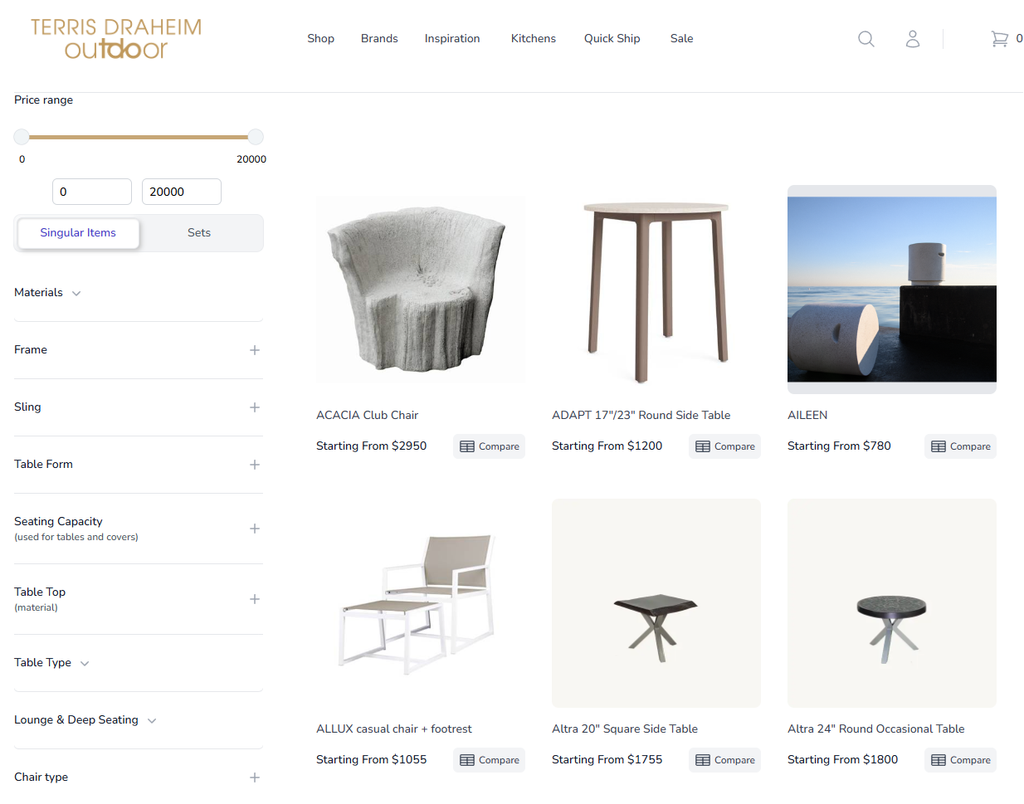
Look at samples outside, in the real light, next to the stone and the planting. Fabric grade affects price, so check it before you fall for a swatch. Our trade portal shows net pricing by fabric grade across the brands we carry.
The Outdoor Upholstery Checklist
Run through this before a spec goes in front of your client.
The site
☐ Full sun, partial shade, or deep shade?
☐ Covered, partly covered, or fully exposed?
☐ Wind-driven rain, coastal air, or pool splash?
☐ How fast will cushions dry where they sit?
The use
☐ Residential, poolside, hospitality, or high-traffic?
☐ Who maintains it, and how often?
☐ Will anyone cover or store the cushions?
The fabric
☐ Solution-dyed?
☐ Lightfastness and abrasion results in hand?
☐ Chlorine and sunscreen exposure considered?
☐ Approved cleaners confirmed with the manufacturer?
The cushion
☐ Quick-dry foam or another draining fill?
☐ Mesh or vents for drainage and airflow?
☐ Removable covers, with replacements available?
☐ UV-resistant thread and zippers?
The paperwork
☐ Fabric grade and pricing confirmed?
☐ Lead time fits the install date?
☐ Flammability requirements checked for commercial work?
☐ Covers specified for exposed sites?
☐ Care guide and warranty in the client’s hands?
Bring Us the Site, Not Just the Swatch
Outdoor upholstery works best when the environment makes the first decision and the color makes the last. We help designers and architects sort through materials, finishes, and furnishings across our full portfolio of premium brands.
Have a project in mind? Visit our Seattle or Portland showroom. Bring the plans, the exposure, and the palette, and we’ll pull fabric and cushion options to match.
Frequently Asked Questions About Outdoor Upholstery
What is the best fabric for outdoor upholstery?
The best fabric depends on the site and the use. Solution-dyed acrylic is the established choice for full sun and poolside settings because the color runs through the fiber. Match the textile to the exposure, the traffic, and the care it will get.
Is outdoor upholstery waterproof?
No. It resists water, and it still gets wet. Quick-dry foam, drainage mesh, and covers keep cushions drying fast between uses.
How do I keep outdoor cushions from getting mildew?
Help outdoor cushions dry quickly. Specify a draining fill, give cushions airflow, clean them on a regular schedule, and cover or store them in long wet stretches.
How many double rubs should an outdoor fabric have?
ACT’s guidelines for woven upholstery set 15,000 Wyzenbeek double rubs for low-traffic use and 30,000 for high-traffic use. Treat those as a floor for comparison, since higher numbers don’t predict a longer life.
What fabric works best for poolside furniture?
Solution-dyed acrylic works best for most poolside furniture. Chlorine attacks surface dye, and solution-dyed fibers carry their color inside. Choose a fabric you can clean often, because sunscreen leaves marks.
Does outdoor fabric fade in the sun?
Any fabric can fade with enough sun. Solution-dyed fabrics hold color longest, and ACT’s outdoor upholstery guideline tests for 1,000 hours of light exposure.
Where can I see outdoor upholstery fabrics in Seattle or Portland?
Visit Terris Draheim Outdoor at 5616 6th Avenue South in Seattle or 3030 NW Nicolai St. in Portland. You can compare fabrics, cushions, and finishes in person with our team.
Want to Learn More About Outdoor Upholstery?
What “Performance Fabric” Means
A performance fabric is a textile built to resist fading, moisture, and stains better than a standard fabric. The term has no single definition, so ask for the test results behind it.
Solution-Dyed vs. Printed Fabric
A solution-dyed fabric gets its color before the fiber forms. A printed fabric gets its color on the surface afterward. Printed patterns offer more detail, and solution-dyed color lasts longer outdoors.
What a Double Rub Is
A double rub is one back-and-forth pass in the Wyzenbeek abrasion test. The count tells you how many passes a fabric took before it showed noticeable wear.
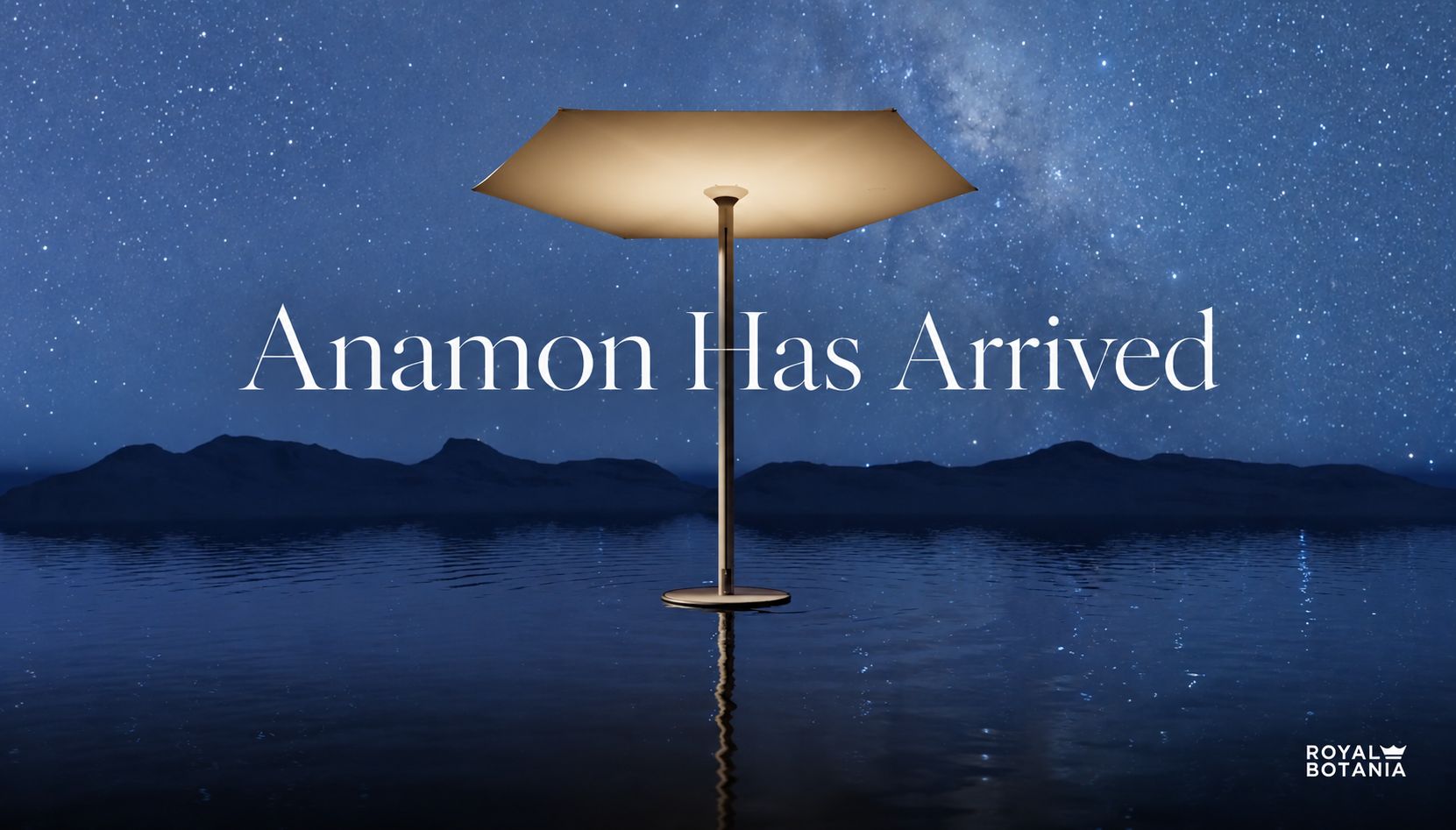
Every umbrella you’ve ever used opens the same way. From the middle, ribs first, right through whatever happens to be sitting around it.
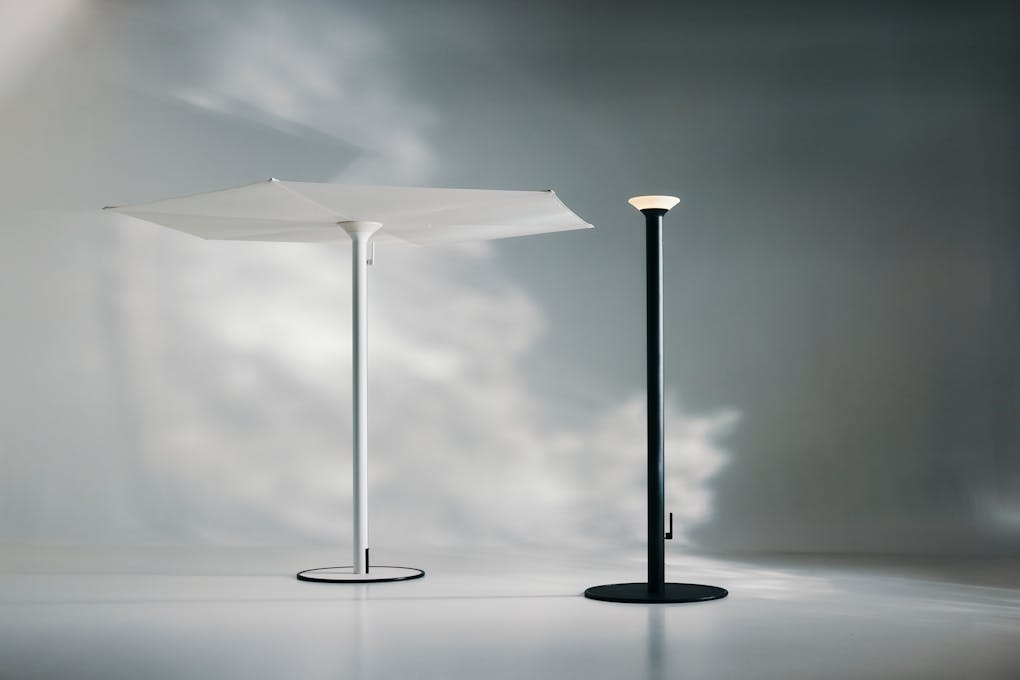
Royal Botania’s new Anamon parasol starts somewhere else entirely. Its canopy rises out of the top of the pole and blooms over your head like a flower.
We’ve been in outdoor furniture since 1985, and umbrellas have opened one way that whole time. This is a brand-new idea. Both of our showrooms have one waiting for you to try.
You Know the Umbrella Shuffle
Dinner’s on the table. The sun drops to the one angle that hits everybody in the eyes. Somebody gets up to open the umbrella.
Chairs scoot back. Somebody rescues the wine glasses. Whoever sits closest to the pole ducks.
Now run that scene again. You walk to a slim column standing beside the table and slide one handle up. A canopy rises out of the top, opens above everyone’s heads, and nobody moves an inch.
Slide One Handle. Watch the Anamon Parasol Bloom.
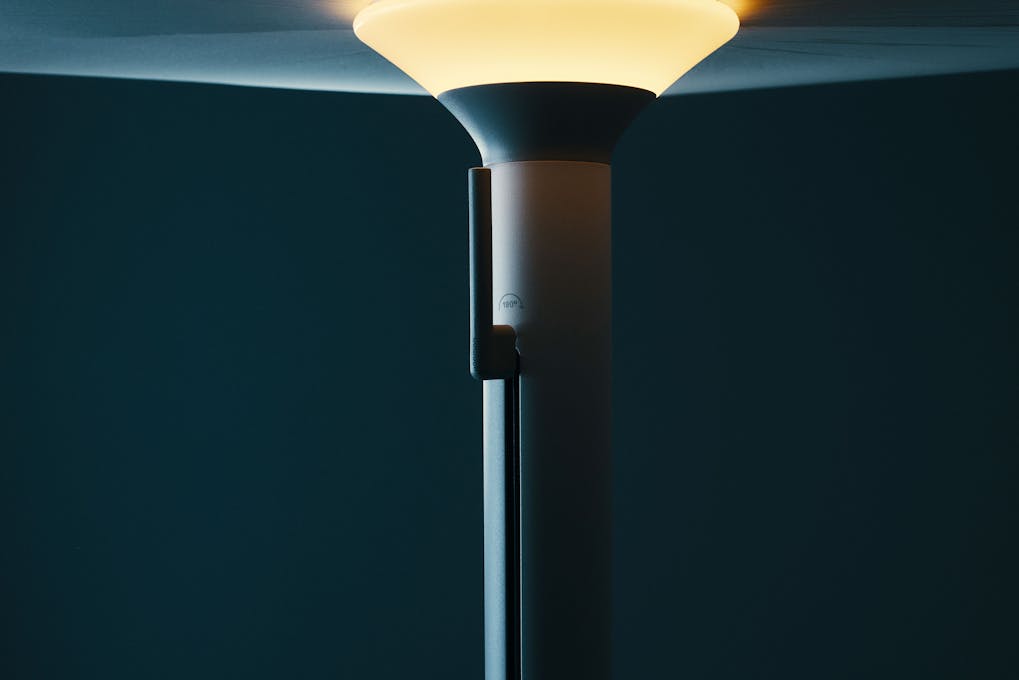
That’s the whole operation. Slide the handle up the pole, and the canopy comes out of the top, then spreads up and out. Slide it back down, and the canopy folds itself inside again.
Royal Botania calls it a top-down opening, and the mechanism is patent pending. Because everything happens overhead, the pole can stand right beside a dining table or a pair of chaises. Restaurant terraces and pool decks are about to get a lot easier to lay out.
Fair warning: you’ll open it twice. Once for the shade, and once because you want to watch it again.
Closed, It Doesn’t Look Like an Umbrella
Here’s the surprise. When Anamon closes, the canopy disappears. No bundle of fabric, no strap, no folded shape waiting for tomorrow.
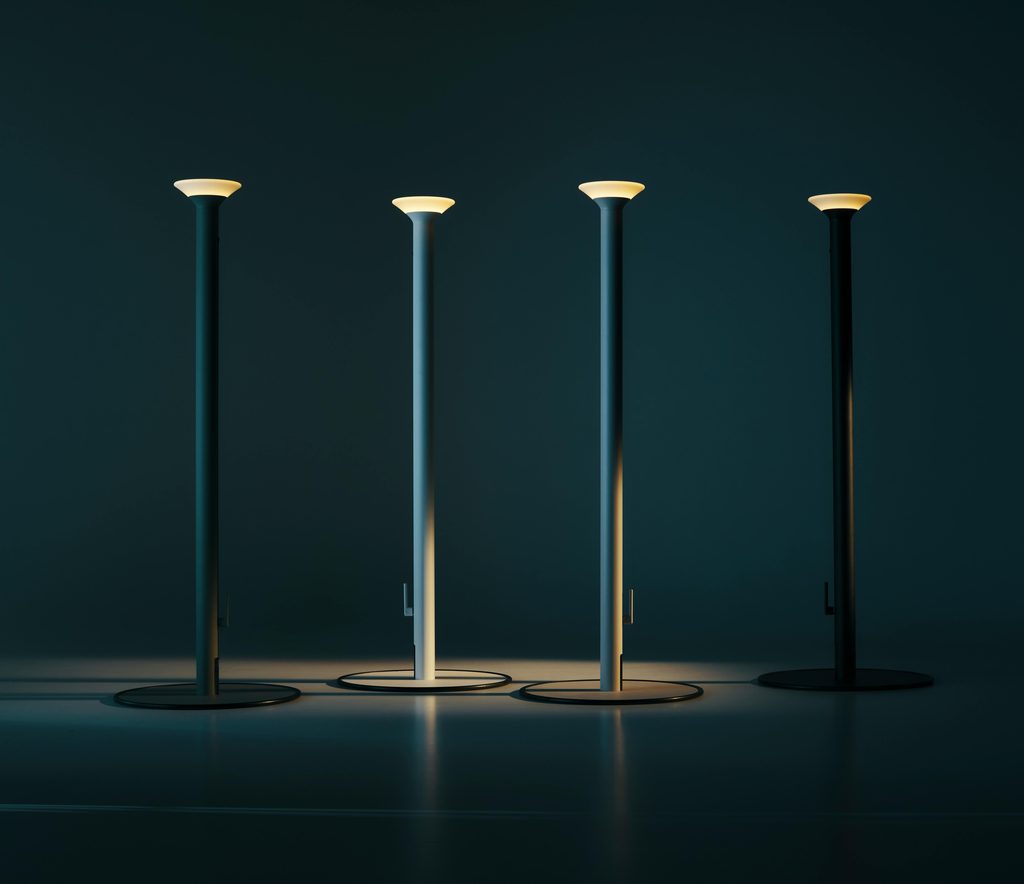
What stays on your patio is a clean, sculptural column with a ring of light at the top. Your guests will assume it’s a lamp.
After dark, they’ll be right.
Then the Sun Goes Down
Tuck the canopy away and Anamon keeps working. A built-in LED ring glows warm white at 2700K, the same soft tone you’d choose for a dining room. Three brightness levels take you from dinner to the last glass of wine.
A rechargeable battery runs the light, so no cord crosses the patio. It charges by USB-C and lasts 6 to 12 hours, depending on how bright you like it.
One piece, two jobs. Shade for lunch, light for dinner.
It Started 20 Meters Underwater
This is our favorite part. More than a decade ago, Royal Botania designer and co-founder Kris Van Puyvelde was scuba diving 20 meters down. He watched a tube-dwelling anemone slide out of its slender tube and sway in the current.
He surfaced and started sketching an umbrella that moved the same way. The early prototypes failed, and the drawings went into a desk.
In 2023, he cleaned out that desk, found the sketches, and tried again. It’s the best case we’ve heard for never throwing anything away.
Even the name carries the story. “An” is Greek for “against,” and Amon is the Egyptian sun god. Against the sun, with a wink at the anemone.
65 Million People Watched an Umbrella Open
Anamon debuted at Milan Design Week in 2025, and somebody filmed it opening. That TikTok passed 65 million views, according to My Modern Met. An umbrella went viral.
If you’re a designer, think about what that gives you in a client presentation. A shade piece with an origin story, a shelf of awards, and a party trick. Your client will remember the umbrella that bloomed.
Built to Live Outside, Rain and All
A mechanism this clever has to earn its keep in real weather, and we live in the Northwest. Royal Botania planned for that. When Anamon closes, a top cap clicks into place and keeps rain, dust, and debris out of the works.
Any water that sneaks in drains out through the base. The frame wears a corrosion-resistant powder coat, and the battery carries an IP55 rating against rain and dust. An optional winter cover handles the off-season.
It moves, too. The base takes the shape of a wheel, so shifting all 110 pounds of Royal Botania Anamon to wherever the sun went takes little effort.
The Numbers, for Your Spec Sheet
Straight from Royal Botania’s published specifications:
Canopy: 300 cm across (about 9 ft 10 in)
Height: 212 cm (about 83.5 in)
Base: 76 cm across (about 30 in)
Pole: 9 cm across (about 3.5 in)
Weight: 50 kg (about 110 lb), including a 40 kg (88 lb) base
Canopy fabric: UV-stabilized polyester with a polyurethane coating for extra sun blocking
Finish: powder coat, with custom colors available
Light: LED ring, three brightness levels, 2700K warm white
Battery: IP55-rated, USB-C rechargeable, 6 to 12 hours per charge
Specifying one for a client? Our trade program gives you true wholesale net pricing with no minimum order. We handle receiving, inspection, assembly, and white glove delivery, so your Anamon umbrella shows up ready to bloom.
Buying for your own patio? You’re welcome here too.
Come Open One Yourself
We can describe the Anamon parasol all day. It’s better when your own hand slides the handle.
Every color is on the floor in both showrooms. Bring your client, your tape measure, or just your curiosity.
Frequently Asked Questions About the Anamon Parasol
How does the Anamon parasol work?
You slide a handle up the pole, and the canopy rises out of the top and spreads open above you. Slide the handle down, and the canopy folds back inside the pole. Royal Botania’s top-down mechanism is patent pending.
What makes the Anamon different from other patio umbrellas?
Anamon opens from the top down, so it can stand right beside a table and open with every chair in place. Closed, the canopy hides inside the pole and Anamon becomes a sculptural light.
Does the Anamon have a light?
Yes. Anamon has a built-in LED ring with three brightness levels and a warm white 2700K glow. A USB-C rechargeable battery powers it for 6 to 12 hours per charge, with no cord or wiring.
Can the Anamon stay outside in the rain?
Yes, Anamon can stay outside in the rain. A top cap clicks over the closed umbrella to protect the mechanism, and a drain in the base clears any water that gets in. Royal Botania also offers an optional winter cover.
How big is the Anamon umbrella?
The Anamon canopy measures 300 cm across, or about 9 feet 10 inches. It stands 212 cm tall (about 83.5 inches) on a 76 cm (30-inch) base and weighs about 110 pounds.
Kris Van Puyvelde, designer and co-founder of Royal Botania, designed Anamon. A tube-dwelling anemone he watched while scuba diving inspired the way it opens.
Where can I see the Anamon parasol in Seattle or Portland?
You can open one yourself at Terris Draheim Outdoor. Visit 5616 6th Avenue South in Seattle or 3030 NW Nicolai St. in Portland, or email outdoor@terrisdraheim.com to set up a visit.
Want to Learn More About the Anamon Parasol?
Parasol or Umbrella?
Same thing. “Parasol” is the word Europe uses for a sun umbrella, and Royal Botania is Belgian. Call it a patio umbrella or an outdoor umbrella and we’ll know what you mean.
What Top-Down Opening Means
A market umbrella pushes its ribs up and out from a hub partway down the pole. A top-down opening umbrella keeps its canopy inside the pole and sends it out the top. The space around the pole stays clear the whole time.
What IP55 Means
An IP rating tells you how well a housing keeps out dust and water. The first 5 covers dust, and the second 5 covers water jets from any direction. In plain terms, Anamon’s battery can live outside.
Who Royal Botania Is
Royal Botania is a Belgian luxury outdoor brand that makes furniture, lighting, planters, and umbrellas. It’s one of more than 20 brands we carry in Seattle and Portland.
You can find beautiful luxury outdoor furniture in Seattle pretty quickly. Finding pieces that actually make sense for the project is a different conversation.
Seattle weather, site exposure, finishes, maintenance expectations, and project timelines can all change what looks like the right choice. A fully exposed terrace may need a very different recommendation than a covered outdoor dining area on the same property.
Interior designers in Seattle can shop for luxury outdoor furniture at Terris Draheim’s Seattle showroom, where you can compare collections in person and work through the details with an experienced outdoor furniture team.
You may need to compare materials, review finishes, request samples, check availability, or work through a custom order. Having someone who can help with those details can save a lot of back-and-forth.
Terris Draheim carries brands including Dedon, Brown Jordan, Gloster, Barlow Tyrie, Kettal, Royal Botania, Tuuci, and Jensen Outdoor. More options aren’t always better. The useful part is narrowing the field to pieces that fit the space, the design, and your client.
Terris’s trade services include product sourcing, material and finish sampling, showroom consultations, specification support, and designer collaboration. When a project is moving quickly, that support can matter just as much as the furniture itself.
If you’re sourcing luxury outdoor furniture in Seattle, look beyond the catalog. The right showroom should help you work through the decision and keep the project moving.
What Should Interior Designers Look For in an Outdoor Furniture Partner?
A beautiful chair or sofa is only one part of a good recommendation. The right showroom should make sourcing easier, not add another task to your list.
When you’re evaluating a showroom or vendor, these are the things that tend to matter:
Curated brands that fit your design standards.
Material expertise based on real outdoor conditions.
Finish options that support the larger design.
Samples you can review with your client.
Sourcing support for specific or custom pieces.
Realistic lead times before you commit to a schedule.
Designer collaboration when the details get complicated.
These details matter when a client approval or installation date is already on the calendar. Good vendor support should reduce decision fatigue, not create more of it.
Choosing Outdoor Furniture for Seattle’s Climate
Seattle’s weather should be part of the furniture conversation from the beginning. Rain and moisture can change how materials, finishes, cushions, and fabrics perform over time.
The site usually tells you more than the city does. Is the furniture fully exposed? Is there overhead cover? Does water drain well? Can cushions dry between uses? Will the space be used through winter?
“Covered” doesn’t always mean protected. A covered dining area can still deal with moisture, wind, and temperature changes.
The recommendation needs to match the actual exposure of the space. A Seattle address alone doesn’t tell you how the furniture will perform.
Look Beyond the Headline Material
Teak, aluminum, and woven furniture can all work outdoors. But the material name only tells you part of the story.
What’s underneath matters too. Construction, finishes, hardware, cushions, fabrics, and drainage can all change how a piece performs once it leaves the showroom.
Proper care matters as well. Maintenance depends on the material and manufacturer’s guidance, particularly when moisture and outdoor exposure are involved. Our outdoor furniture care and maintenance guidance can help when you’re narrowing down a collection.
Teak, Aluminum, and Mixed Materials
Teak is one of the easier materials to recommend when you want natural warmth and a timeless feel. Quality teak handles outdoor conditions well and can remain outside year-round when properly cared for.
The tradeoff is maintenance. If your client expects completely maintenance-free furniture, that conversation needs to happen early.
Powder-coated aluminum is often a strong choice for cleaner, contemporary designs. It’s lightweight, relatively easy to maintain, and gives you flexibility when the furniture needs to work with a modern architectural palette.
There isn’t one “best” outdoor furniture material. The right combination depends on the space, the exposure, and what your client expects from it.
What Makes Luxury Outdoor Furniture Worth the Investment?
A higher price doesn’t automatically make outdoor furniture better. The difference should show up in materials, construction, comfort, design, and support.
The frame, finish, cushions, and upholstery all affect how the furniture feels and performs. Performance fabrics such as Sunbrella also matter when cushions face regular sun and moisture.
Warranty coverage, care guidance, replacement components, and supplier support matter long after delivery. A lower price can look good at first, but replacing underperforming furniture a few years later tells a different story.
Choose the piece that earns its place in the project, not simply the one with the highest price tag.
Outdoor Furniture for the Way Your Client Uses the Space
The collection usually becomes easier to choose once you know how your client wants to use the space.
Dining, lounging, shade, circulation, and views all need to work together. A beautiful collection can still feel wrong if people can’t move comfortably or gather where they naturally want to.
Dining Areas
Table size and circulation become important quickly. You want enough room around the dining table for people to move comfortably without making the space feel oversized.
The connection to the kitchen or dining space inside matters too. When those proportions relate well, the outdoor dining area feels like part of the larger design.
Lounge and Conversation Areas
A sofa or sectional should create a natural place to gather. Seating orientation, table placement, and circulation all affect how comfortable the space feels.
And comfort matters. If nobody wants to sit there for more than ten minutes, the furniture isn’t doing its job.
Sectionals and Larger Spaces
Sectionals can anchor a larger outdoor space and create distinct areas for entertaining.
Dimensions matter, but delivery deserves the same attention. A sectional can look perfect on a plan and become a completely different problem when it has to get through a gate, around a corner, or up a flight of stairs.
Chaise Lounges and Relaxation Areas
Chaise lounges can create quieter places to read, relax, or enjoy the view. Placement matters, especially around pools, strong sunlight, and main circulation paths.
Shade and Comfort
Shade systems and umbrellas can make an outdoor space much more usable. Comfort shouldn’t be something you add after the furniture plan is finished.
Brands and Collections for Designer-Led Projects
A strong brand portfolio gives you room to choose. But more options aren’t always better. Too many choices can make sourcing harder, not easier.
That’s where a good showroom relationship can help. You can narrow the field around the project instead of sorting through every possible collection. Material, style, comfort, maintenance, availability, and lead time can quickly rule out pieces that looked right at first.
Terris Draheim’s brands include Dedon, Brown Jordan, Gloster, Barlow Tyrie, Kettal, Royal Botania, Tuuci, Jensen Outdoor, Summit Furniture, MamaGreen, Castelle, Danao Living, and Loll Designs. You can also explore our outdoor furniture collections when comparing options.
If you’re furnishing several areas, collections should work together without everything looking identical. Dining chairs, lounge seating, tables, cushions, and shade can share a design language while serving different purposes.
What Changes When You’re Specifying Furniture for a Client?
Once you’re specifying for a client, the furniture decision gets a little more complicated.
A finish sample may be needed before you present a choice. Stock may need to be confirmed. A custom order may need another check before installation is scheduled.
These details can seem small while you’re selecting furniture. They become much more important once the project is moving. Reviewing delivery and project requirements early can help prevent surprises later.
None of these details are particularly glamorous. They can, however, save you from a difficult conversation later.
A finish sample can prevent the wrong approval. A lead-time check can prevent a schedule problem. Knowing how replacement pieces are handled can save you another headache years down the road.
That’s where a showroom relationship becomes useful. Terris supports trade professionals with sourcing, samples, client consultations, specification support, and designer collaboration.
Planning an outdoor space for a client?
Bring your plans, dimensions, finish direction, or questions. You don’t need every decision made before you visit. The Terris team can help you compare collections and work through the details.
Why Work With Terris Draheim?
Terris Draheim has been helping clients and design professionals with outdoor furnishings since 1985. The Seattle showroom brings together established outdoor brands with the sourcing, sampling, and design support trade professionals often need.
You can compare materials and finishes in person, test seating comfort, look at proportions, and see how collections work together.
The goal isn’t to tell you what to buy. It’s to help you make a choice you feel good about putting in front of your client.
Visit our Portland or Seattle Showroom
Online images can help narrow the search. They can’t always tell you how a chair feels, how a finish looks in person, or how two pieces relate in scale.
That’s where a showroom visit can change the conversation.
Your dimensions, plans, finish direction, or even a few questions are enough to get the conversation started. You don’t need every decision made before you walk through the door.
You should leave with fewer options, a clearer direction, and more confidence in what you’re putting in front of your client.
Questions Designers Ask About Luxury Outdoor Furniture in Seattle
What outdoor furniture materials work well in Seattle?
Teak, aluminum, woven materials, and mixed-material designs can all work well. The right choice depends on exposure, maintenance expectations, construction, and the rest of the project.
Is teak a good choice for Seattle outdoor spaces?
Yes. Teak offers warmth, longevity, and a natural look. The tradeoff is maintenance, so make sure your client understands how the wood will weather over time.
Is aluminum suitable for luxury outdoor furniture?
Yes. Powder-coated aluminum can work especially well for contemporary outdoor spaces. The quality of the frame and finish matters more than the material label alone.
Is luxury outdoor furniture worth the investment?
It can be when the quality matches the project. Look at construction, comfort, materials, finishes, warranty coverage, maintenance, and replacement support. A higher price doesn’t automatically make furniture better.
How should outdoor furniture be maintained in Seattle?
Maintenance should match the material, finish, fabric, and site conditions. Manufacturer guidance becomes especially important when moisture and cushion drying are part of the equation.
How do I choose furniture for an exposed deck?
Exposure is the first thing we’d look at. Rain, direct sun, wind, drainage, drying time, and maintenance expectations can all change the recommendation.
Can Terris Draheim help with outdoor furniture sourcing?
Yes. Terris supports trade professionals with product sourcing, material and finish sampling, showroom consultations, specification support, and designer collaboration.
Does Terris Draheim work with interior designers?
Yes. Interior designers are an important trade audience for Terris, with support available for sourcing, samples, client consultations, and project guidance.
Can designers review materials and finishes in the showroom?
Yes. Seeing materials and finishes in person makes it easier to compare options and gives clients more confidence in the final choice.
Is outdoor furniture completely waterproof?
No. Outdoor furniture is designed for outdoor conditions, but different materials and components respond differently to moisture. Cushions, fabrics, finishes, and drainage all matter.
A Simple Checklist Before You Choose
Before a recommendation is finalized, a few details can make or break the decision.
Material Fit
Does the material suit the weather?
Is the furniture fully exposed?
How will moisture drain?
What maintenance will it need?
Comfort
Is the seat depth right?
Do the cushions feel supportive?
Will the client actually use it?
Layout
Does the furniture fit the space?
Is circulation comfortable?
Does the layout support dining or lounging?
Ownership
What does the warranty cover?
How should the furniture be maintained?
Can replacement parts be sourced later?
Sourcing
Is the lead time realistic?
Is the piece in stock?
Will delivery work with the project schedule?
The right outdoor furniture doesn’t just finish the space. It helps the entire design work better.
When the materials, comfort, style, and practical details all work together, the recommendation becomes much easier to stand behind.
You can find beautiful outdoor furniture pretty quickly. Finding the right pieces for an entire client project is a different conversation.
Maybe you’re furnishing a large backyard with dining furniture, lounge seating, tables, and shade. Now you’re comparing materials, finishes, dimensions, comfort, availability, and lead times while trying to make sure everything still feels connected to the design.
That’s where a good outdoor furniture trade program can make the process easier. Instead of sorting through every collection yourself, you have a resource you can work through those decisions with.
For designers in Seattle and Portland, Terris Draheim offers true wholesale net pricing, product sourcing across more than 20 brands, material and finish samples, showroom consultations, specification support, and white glove delivery through installation.
More importantly, you can start with the project rather than the product.
Let’s say you have a client who wants to turn an underused patio into a space they’ll actually use.
Before we start pulling collections, we’d want to know what you’re working with. How large is the space? How will your client use it? What does the architecture look like? Are you dealing with coastal exposure, heavy moisture, or full sun? And what direction are you already taking with the interiors?
Those answers can narrow the field quickly.
We help Seattle and Portland designers source and select outdoor furniture for residential and professional projects. The trade program gives you access to more than 20 collections spanning furniture, shade, fire, rugs, outdoor kitchens, and accessories – all in one place, with wholesale net pricing broken down by fabric grade so you can spec accurately from the start.
You can see materials and finishes in person, sit in the furniture, compare options, and work through the details before you put a recommendation in front of your client.
That’s particularly useful when you’re furnishing patios, rooftops, pool areas, large backyards, or complete outdoor living spaces.
If you’re working through a project now, talk with the Terris team about your outdoor furniture needs.
What Do You Get From an Outdoor Furniture Trade Program?
Let’s start with the part everyone expects: trade pricing.
It matters, but it’s not the only reason to have a trade relationship.
You’re already managing the architecture, finishes, furnishings, client expectations, and project timeline. Outdoor furniture adds another layer of decisions, particularly when you’re coordinating several collections or trying to find materials that will actually hold up.
A good trade program should help make those decisions easier.
Trade Pricing
Most trade programs offer a percentage off retail. That’s not what this is.
Terris Draheim offers true wholesale net pricing — the same pricing structure manufacturers use for authorized dealers. When you log into the trade portal, you can see net pricing broken down by fabric grade across every brand we carry. That means you can build accurate project budgets without back-and-forth on pricing, and you know exactly what margin you’re working with before you put a recommendation in front of your client.
There’s no minimum order required for standard trade pricing. Whether you’re sourcing one piece or furnishing an entire property, the pricing structure is the same.
Access to 20+ Brands in One Place
This is where a lot of designers find the most value, even if it’s not the first thing they ask about.
Many designers come to us knowing two or three brands they’ve worked with before. What they don’t always realize is that Terris Draheim represents more than 20 brands across furniture, shade architecture, fire features, outdoor rugs, kitchens, and accessories. Brown Jordan, Gloster, Barlow Tyrie, Dedon, Kettal, Jensen Outdoor, Heatsail, Tuuci — and that’s before you get into the full range.
Instead of going to each manufacturer’s website separately, you can shop across all of them in one trade portal, with consistent net pricing, in one conversation. That’s a different kind of efficiency than a discount.
Product Sourcing
Finding one outdoor chair is easy.
Finding dining chairs, a sectional, lounge seating, tables, cushions, and shade that all work together takes more thought.
This is where having someone who knows the collections can save you time. Tell us what you’re trying to accomplish, and we can help narrow the options based on style, materials, finishes, comfort, layout, and how the space will be used.
You shouldn’t have to compare every product just to find the handful that actually make sense.
Material and Finish Samples
You know how different a finish can look once it’s next to the actual flooring or fabric.
A product photo can’t always show you that.
Bring the samples into the design conversation and look at them alongside the architecture, upholstery, flooring, and landscape. It’s much easier to catch something that feels off before the client is looking at the final selection.
Showroom Consultations
This is one of the biggest advantages of seeing outdoor furniture in person.
You can look at the proportions. Feel the materials. Sit in the chairs. Compare finishes. Get a better sense of how a collection actually feels instead of relying entirely on a product photograph.
We have showrooms in Seattle and Portland where you can experience collections in person — including outdoor kitchens, fire features, and shade architecture alongside furniture — and work through your selections with the team.
And comfort is worth testing.
A chair can look perfect in a photograph and feel completely different once you sit in it.
Once you’ve found the right collection, the details start to matter.
You may need dimensions, configurations, finishes, fabrics, quantities, and other product information before you can finalize the recommendation. The team works alongside you through that process, not just at the point of order.
White Glove Delivery and Installation
This part matters more than most people realize until something goes wrong.
Terris Draheim handles receiving, inspection, assembly, and white glove delivery through installation. Before the furniture ever arrives at your client’s home, it goes through an inspection at our receiving facility. That means issues get caught and resolved before the client sees the product, not after.
Delivery coordination is also part of the conversation before you fall in love with a collection. If installation is six weeks away and the furniture takes twelve weeks, you have a problem before the order is even placed. Availability and lead times should come up early, particularly for larger projects with firm installation dates.
How to Work Through Outdoor Furniture With a Trade Partner
You don’t need to have every decision made before you reach out.
Start with what you know.
Start With the Space
Tell us how the space works and what your client wants from it.
Is this where they entertain? Is it a quiet place for morning coffee? Does the family spend most of their time around the pool? Do they need flexible seating for larger gatherings?
Then look at the physical space. Measure the footprint, consider circulation, and think about where dining, lounging, shade, and other activities need to happen.
The layout usually tells you more than the product catalog does.
Narrow the Collections
Once we know what the space needs, we can start looking at collections that fit.
Maybe the architecture calls for something clean and structured. Maybe the home needs the warmth of teak. Maybe you’re working with a coastal property where material performance needs to come first.
You can usually narrow the field pretty quickly once those pieces are clear.
Bring in the Samples
Now look at the materials together.
Put the finish next to the flooring. Compare the fabric with the architecture. Look at the frame against the surrounding landscape.
This is where a showroom conversation can be much more useful than scrolling through product pages.
Check the Details
Before the client approves the selection, go back through the practical pieces.
It’s much easier to make a change now than after the order has been placed.
Talk Through Delivery
Finally, make sure the timeline works.
If your project has a firm installation date, lead time should influence the recommendation from the beginning.
A beautiful selection that arrives too late isn’t a successful selection.
Who Can Benefit From an Outdoor Furniture Trade Program?
Interior designers are a natural fit, but you don’t have to be working exclusively in interiors to benefit from a trade relationship.
Interior Designers
If you’re carrying a strong design concept from inside the home to the outdoor space, furniture needs to feel like part of that same story.
You may already have the palette, materials, and overall direction. The question becomes finding outdoor collections that support it while giving your client the comfort and quality they expect.
Architects
If you’re approaching the project from the architectural side, material, proportions, weather exposure, and overall design consistency may be higher on the list.
The furniture still needs to feel intentional within the architecture, not like an afterthought.
Landscape Designers and Landscape Architects
You’ve already spent considerable time shaping the outdoor environment.
Furniture should build on that work.
Think about how seating, dining, pool areas, hardscape, planting, and architecture come together. The right furniture can help turn a landscape plan into a space people actually want to spend time in.
Design-Build and Hospitality Professionals
Larger residential, hospitality, and commercial projects can bring additional requirements around quantities, specifications, availability, and delivery.
If that sounds like your project, bring those requirements into the conversation early so the furniture can be evaluated alongside the rest of the schedule.
How to Choose Outdoor Furniture for Your Project
Before we look at a specific collection, there are a few things we’d want to talk through.
Where Will the Furniture Live?
Start with the environment.
A covered outdoor room is different from a fully exposed rooftop. A coastal property brings different concerns than a protected backyard.
Think about sun, moisture, wind, salt air, and seasonal weather. Then match the materials to what they’re actually going to experience.
Maintenance matters here too. If your client wants something they can largely forget about, make sure the material and finish support that expectation.
How Will Your Client Use It?
This sounds obvious, but it changes the furniture you choose.
If they host large dinners, dining comfort and table size matter. If the space is primarily for lounging, seat depth and cushion construction become more important.
And if nobody wants to sit on it, it’s just expensive decoration.
Does the Scale Work?
Measure before you fall in love with the collection.
A large sectional can look incredible in a showroom and completely overwhelm a smaller terrace. The opposite can happen in a large outdoor room where undersized furniture leaves the space feeling unfinished.
Leave enough room for people to move comfortably between areas.
Do the Finishes Work Together?
Look at the furniture as part of the whole project.
You don’t need every material to match. You do want the finishes, silhouettes, proportions, and textures to feel intentional alongside the architecture and interiors.
Can You Get It When You Need It?
Check availability before the selection becomes final.
Lead times can change the conversation quickly, particularly when you’re working toward a fixed installation date. For larger investments, warranty coverage and replacement availability are worth looking at too.
Where an Outdoor Furniture Trade Program Can Help
The value becomes especially clear when a project has a lot of moving pieces.
For a luxury residential renovation, you may already have an established interior palette. Outdoor furnishings should extend that design language rather than starting a completely separate conversation.
With new construction, you have an opportunity to think about indoor and outdoor selections together from the beginning. Furniture scale, finishes, dining, lounge areas, pool spaces, shade, and outdoor kitchens can all be considered as part of the larger design.
A large backyard project may require several furniture categories at once. Keeping dining, lounge seating, tables, fabrics, and shade cohesive is easier when you’re working through the selections with one resource.
For a vacation property, think about how the home will actually be used. Comfort, occupancy, maintenance, and weather exposure can all change what makes sense.
And with a landscape redesign, furniture can help complete the vision you’ve already created. The goal is for the outdoor living areas to feel like they belong there, not like furniture was added after everything else was finished.
Questions Designers Ask About Outdoor Furniture Trade Programs
Who can join an outdoor furniture trade program?
Interior designers, architects, landscape designers, landscape architects, design-build firms, and hospitality designers are all part of the trade audience Terris Draheim works with. Contact the Terris team to confirm current eligibility.
Is this a real wholesale program or just a percentage off retail?
It’s true wholesale net pricing — not a percentage off the retail price. When you access the trade portal, you see net pricing by fabric grade across all brands. That’s a different structure than most trade programs, and it gives you more accurate information to work with earlier in the project.
Is there a minimum order requirement?
No. There’s no minimum order required for standard trade pricing. You can source a single piece or furnish an entire property under the same pricing structure.
Can I request outdoor furniture samples?
Yes. Material and finish sampling is part of the trade offering. Samples are particularly useful when you’re comparing furniture against flooring, fabrics, architecture, and other selections.
Can a trade program help me source outdoor furniture across multiple brands?
Yes. That’s one of the practical benefits of working with Terris Draheim specifically. Rather than going to each brand’s website separately, you can shop across more than 20 collections in one place. If you’ve only been working with a few brands, there are almost certainly options in the full range that would serve your clients well.
What happens after the order is placed?
Terris Draheim handles receiving, inspection, assembly, and white glove delivery through installation. Furniture is inspected before it goes to your client, so issues get resolved before delivery rather than after.
Can trade programs help with larger projects?
Yes. If you’re working on a larger residential, hospitality, or commercial project, discuss quantities, specifications, availability, and delivery requirements early. The earlier those details are in the conversation, the easier the rest of the project is to manage.
Make Outdoor Furniture Sourcing Easier
You don’t need another vendor just to add another vendor to the project.
You need someone who understands outdoor furniture and can help you work through the decisions — from the first site conversation to delivery and installation.
Bring us the project. Tell us what you’re trying to accomplish, what the space looks like, what your client expects, and where you’re running into questions.
From there, we can start narrowing the collections, materials, finishes, comfort, and practical details that make sense. With more than 20 brands available through the trade portal, wholesale net pricing by fabric grade, and no minimum order, there’s usually a path forward that works.
That’s really where an outdoor furniture trade program earns its value. Not just in the pricing, but in having a team you can work through the process with.
If you’re sourcing outdoor furniture for a client project in Seattle, Portland, or the surrounding Pacific Northwest, contact the Terris team to learn more about the trade program and how we can support your next project.