If you’re working on an outdoor project right now, chances are you’ve already hit the material question.
Maybe your client loves the look of teak. Perhaps they’re asking for something low maintenance. Or, maybe you’re looking at a waterfront property and trying to figure out what will still perform years after installation.
That’s usually when someone asks what the best material for outdoor furniture is. The answer is rarely as simple as a single material. That’s usually where the conversation starts in our showroom.
Often, someone points to a collection and asks, “Would you specify this for a project like mine?”
The answer is rarely about the furniture alone.
Instead, we’re usually talking about exposure, maintenance expectations, how the outdoor space will be used, and what the client expects long after the project is complete.
A collection can look incredible in a presentation and still create headaches later. On the other hand, a simpler collection can end up being the better recommendation.
That’s why we tend to start with the project before we start talking about products. Once you understand the environment, the material choices usually become much clearer.
What We Look At Before Recommending a Material
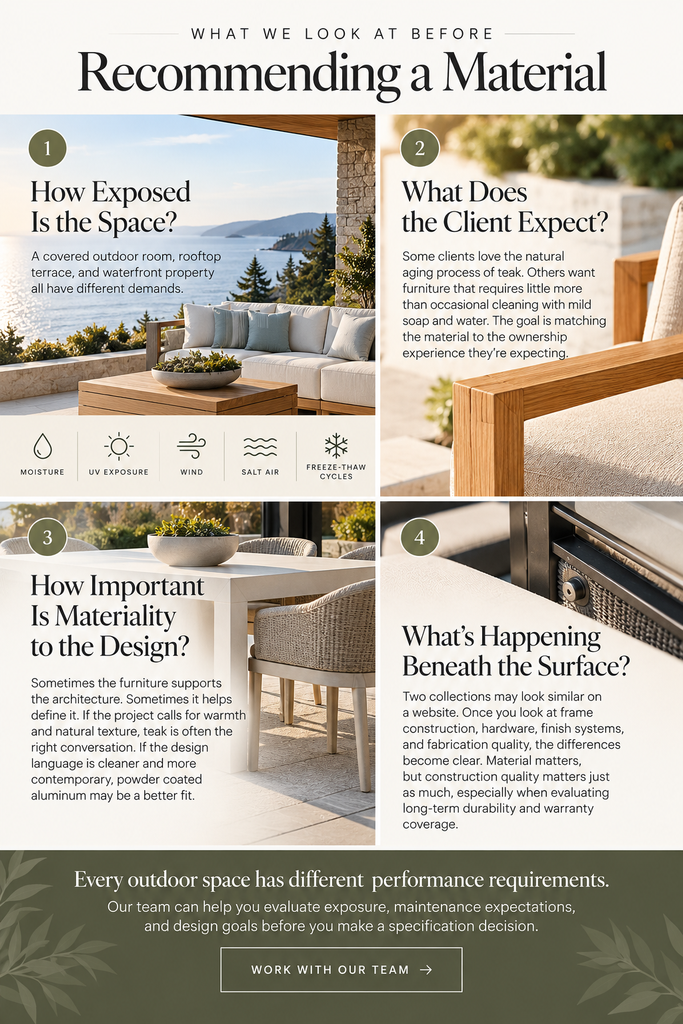
Before we start comparing outdoor furniture materials, there are usually a few questions that help narrow the field.
How Exposed Is the Space?
This is often the first thing we look at.
A covered outdoor room, a rooftop terrace, and a waterfront property may all need outdoor furniture, but they’re asking very different things from the materials.
Moisture, UV exposure, wind, salt air, and freeze-thaw cycles all influence how furniture performs over time. The more demanding the environment, the more selective you need to be.
What Does the Client Expect?
This question can save a lot of frustration later.
Some clients love the natural aging process of teak wood. Others want furniture that requires little more than occasional cleaning with mild soap and water. Neither approach is wrong.
The goal is making sure the recommendation matches the ownership experience they’re expecting.
How Important Is Materiality to the Design?
Sometimes the furniture is supporting the architecture. Sometimes it’s helping define it.
If the project calls for warmth and natural texture, the conversation often moves toward teak. If the design language is cleaner and more contemporary, powder coated aluminum may be a better fit.
The material should feel intentional within the larger design story.
Every outdoor space has different performance requirements. Our team can help you evaluate exposure, maintenance expectations, and design goals before you make a specification decision.
What’s Happening Beneath the Surface?
This is where many specifications succeed or fail.
Two collections may look similar on a website. Once you start looking at frame construction, hardware, finish systems, and fabrication quality, the differences become much more obvious.
Material matters. Construction quality matters just as much, especially when you’re evaluating long-term durability and warranty coverage.\
Best Materials for Luxury Outdoor Furniture
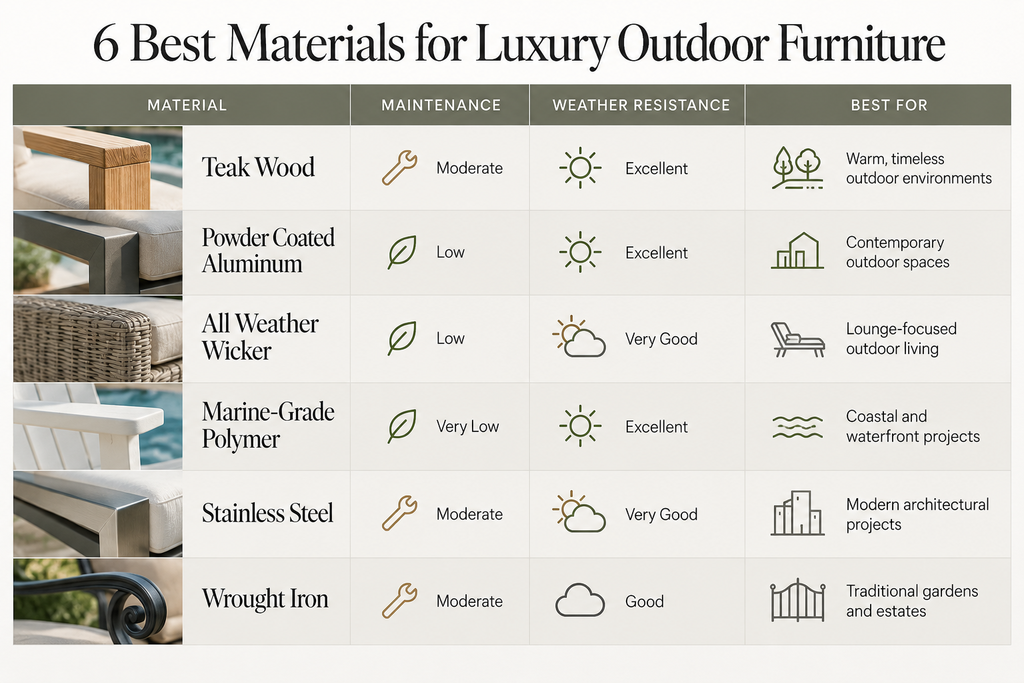
Before we walk through individual materials, here’s a quick overview of the options we discuss most often with designers and architects.
| Material | Maintenance | Weather Resistance | Best For |
| Teak Wood | Moderate | Excellent | Warm, timeless outdoor environments |
| Powder Coated Aluminum | Low | Excellent | Contemporary outdoor spaces |
| All Weather Wicker | Low | Very Good | Lounge-focused outdoor living |
| Marine-Grade Polymer | Very Low | Excellent | Coastal and waterfront projects |
| Stainless Steel | Moderate | Very Good | Modern architectural projects |
| Wrought Iron | Moderate | Good | Traditional gardens and estates |
Teak Wood
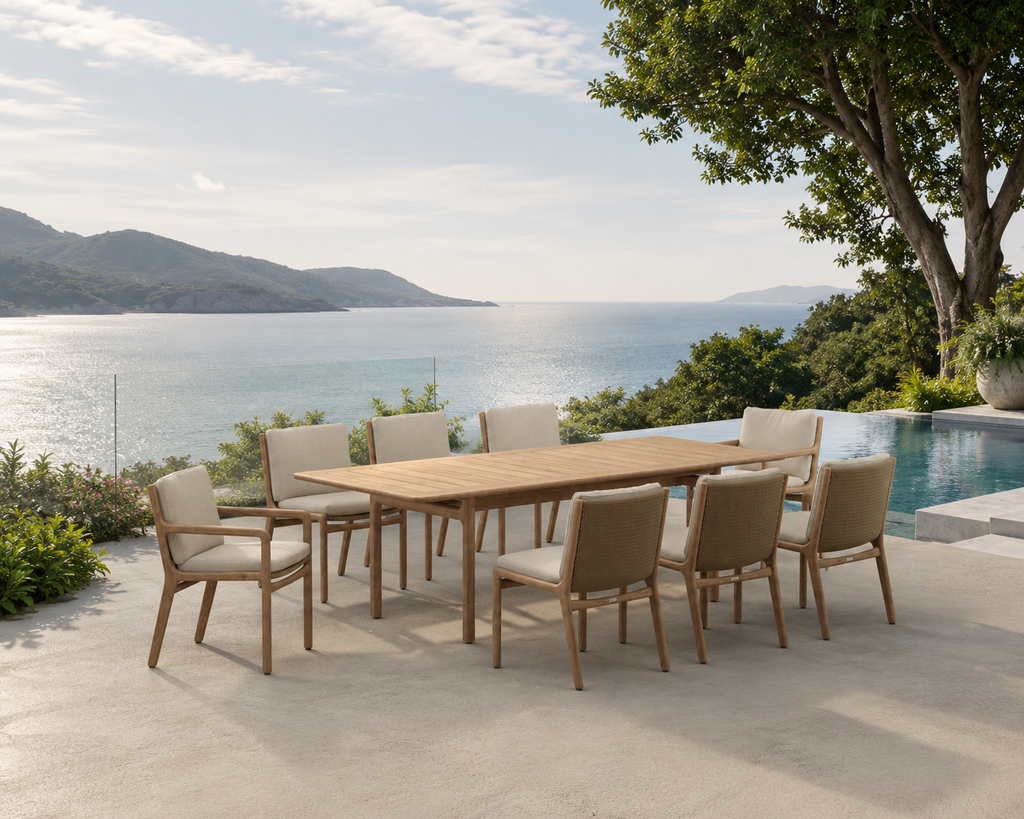
Let’s start with teak because it comes up in almost every showroom conversation.
If you’re looking for warmth, natural beauty, and long-term performance, teak is usually one of the first materials worth considering. One reason it continues showing up on projects year after year is that it performs as well as it looks.
Teak is naturally resistant to moisture, rot, insects, and UV exposure. It handles outdoor conditions exceptionally well and can last 25 years or more when properly maintained.
The aging process is often part of the appeal. Over time, teak develops a silvery-gray patina that many clients end up loving. Others prefer to maintain the original golden color.
Neither is wrong, but it’s a conversation worth having early. If your client understands how teak will age over time and what proper care looks like, you’re usually setting the project up for success.
If you’d like to compare different approaches to teak, brands like Barlow Tyrie, Gloster, Jensen Outdoor, Summit Furniture, and MAMAGREEN all bring something unique to the conversation. The common thread is the material itself. The difference is how each manufacturer interprets it through design, craftsmanship, and construction.
Powder Coated Aluminum
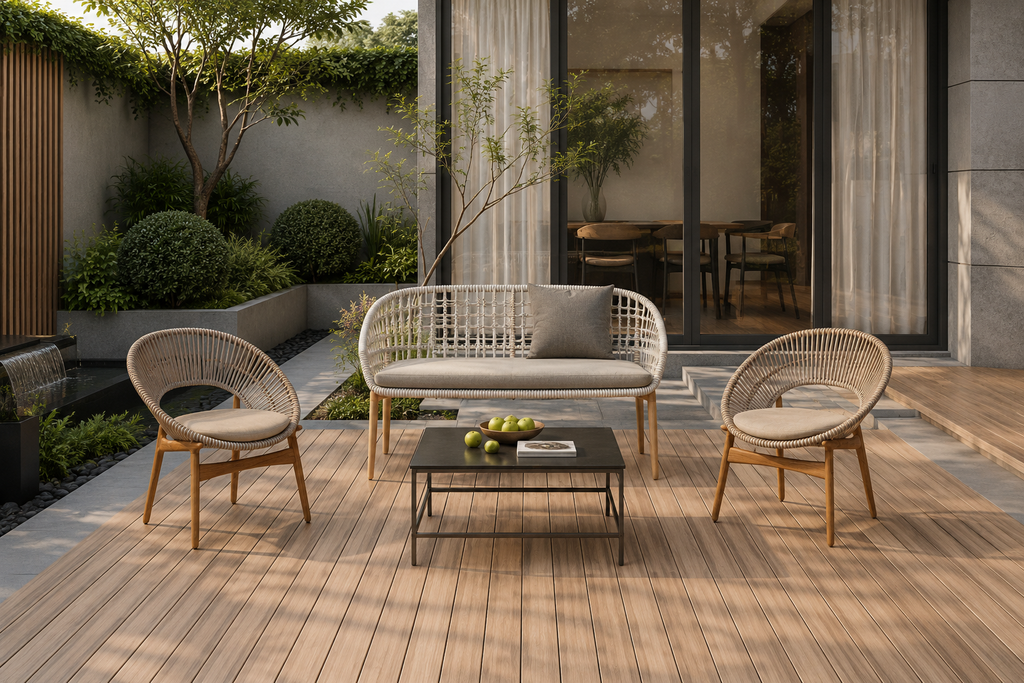
Now let’s talk about aluminum.
If low maintenance is high on your priority list, aluminum is often worth a closer look.
Powder coated aluminum works across a surprisingly wide range of projects. It’s weather resistant, naturally resistant to rust, lightweight, and available in styles that range from contemporary to transitional.
For rooftop terraces, poolside environments, and clients who don’t want a long maintenance checklist, it solves a lot of problems before they start. Most collections need little more than regular cleaning with mild soap and water.
What we pay attention to is everything beyond the material itself.
The quality of the powder coated finish, the hardware, the welding, and the construction details often have a bigger impact on long-term durability than people realize. That’s why two aluminum collections that look similar on paper can perform very differently once they’re outdoors.
Brands like Brown Jordan, Kettal, Royal Botania, and Castelle each approach aluminum differently, which is one reason construction quality deserves as much attention as the material itself.
All Weather Wicker and Resin Wicker
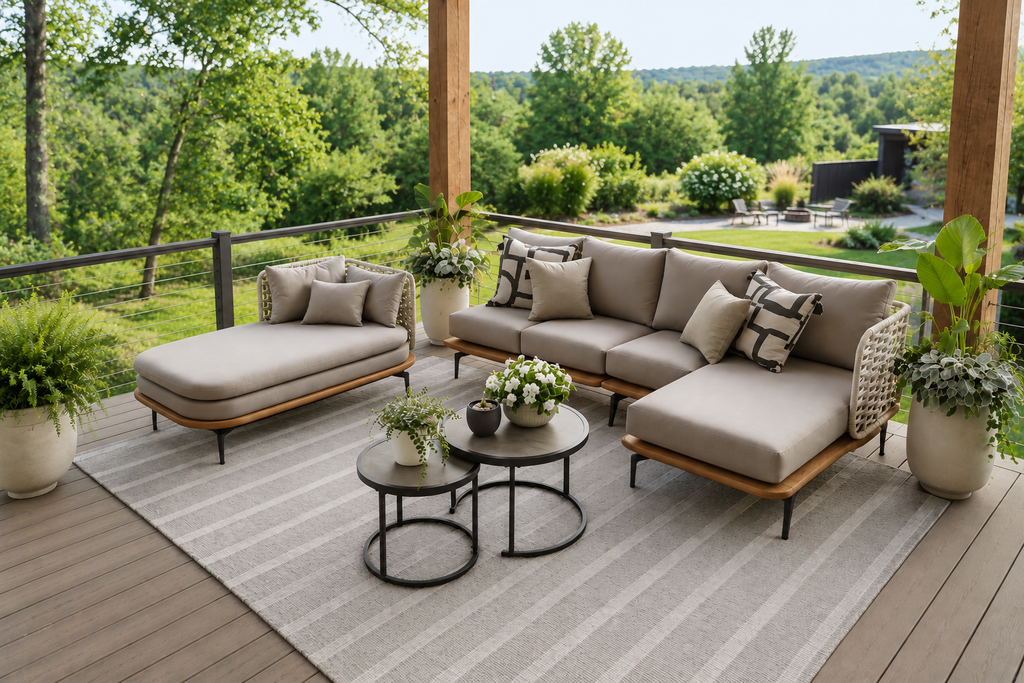
Comfort changes the material conversation pretty quickly.
If you’re trying to bring more texture and comfort into an outdoor space, woven furniture is often worth a look. It introduces texture, softness, and a more relaxed feeling than many metal alternatives.
Not all wicker is designed for outdoor use, though.
Natural wicker may struggle with prolonged exposure to moisture and UV rays. High-quality resin wicker and all weather wicker are engineered specifically for outdoor environments.
The best collections pair durable aluminum frames with woven fibers designed to resist moisture, UV fading, and temperature changes.
Construction matters here.
A woven exterior can look beautiful in a showroom, but frame quality, fiber quality, and manufacturing standards often determine how the furniture performs years later.
When those elements come together, all weather wicker becomes one of the most versatile outdoor furniture materials available. It’s particularly well suited to outdoor sofas, lounge seating, and spaces where comfort plays a central role.
If woven furniture is part of your project, DEDON remains one of the brands that helped define the category. Its handwoven collections continue to show how all weather wicker can balance comfort, durability, and design.
Marine-Grade Polymer
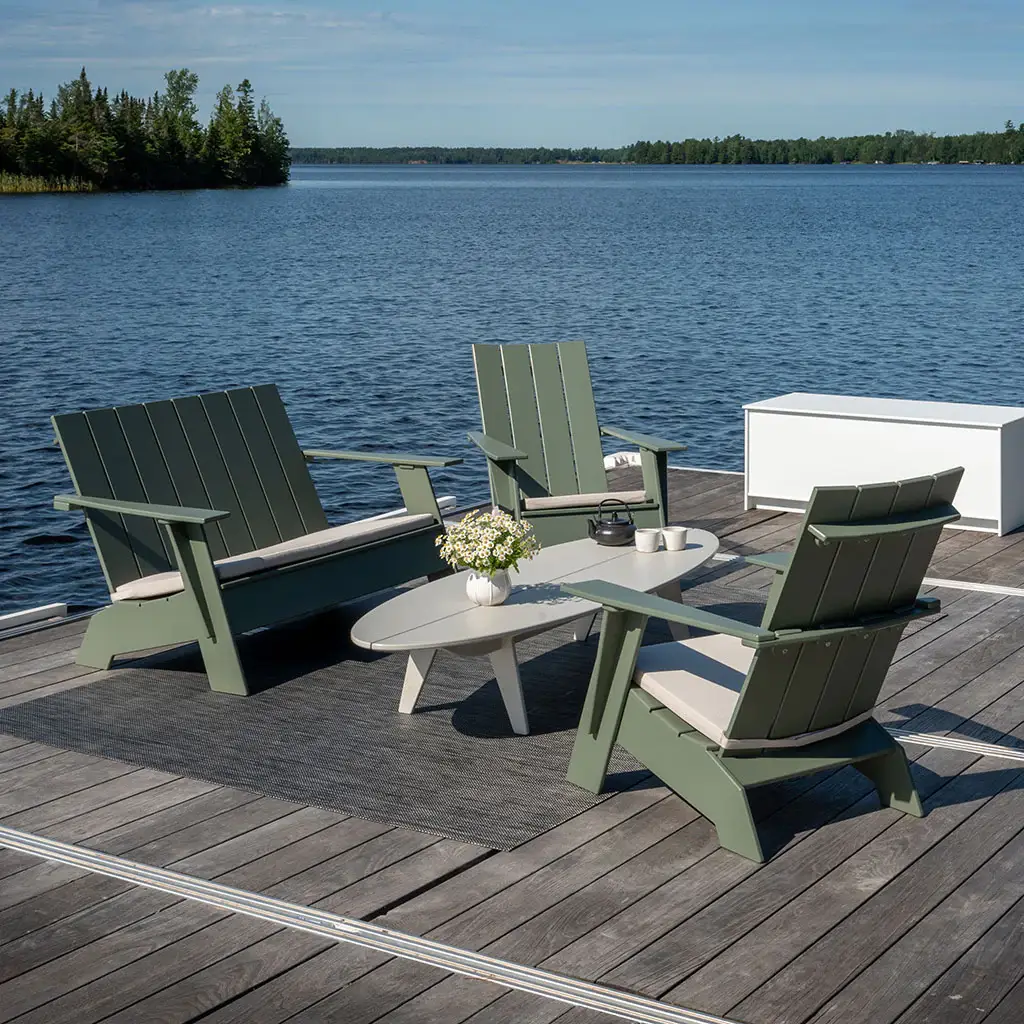
Marine-grade polymer usually enters the conversation when the environment starts narrowing the options.
Waterfront properties, beach homes, and coastal projects all tend to point in the same direction. In those situations, performance tends to matter more than romance. Marine-grade polymer is designed to resist moisture, won’t rot, and performs exceptionally well in demanding weather conditions.
The other surprise for many people is how far the design has come. Today’s collections offer cleaner lines and more refined aesthetics than many people expect.
Loll Designs is a good example. Its HDPE collections demonstrate how recycled materials and contemporary design can come together in furniture built for demanding outdoor environments.
Stainless Steel
If you’re working with clean lines, strong geometry, and contemporary detailing, stainless steel is often worth considering. Clean lines. Strong geometry. Contemporary detailing. In the right setting, it feels completely natural.
The material brings a level of precision that pairs well with modern residential and hospitality projects. Environmental conditions still matter.
A protected outdoor room creates different expectations than a coastal property exposed to salt air. That’s why site conditions are usually part of the stainless steel conversation from the beginning.
When specified correctly, it can be an excellent material for outdoor furniture.
Wrought Iron
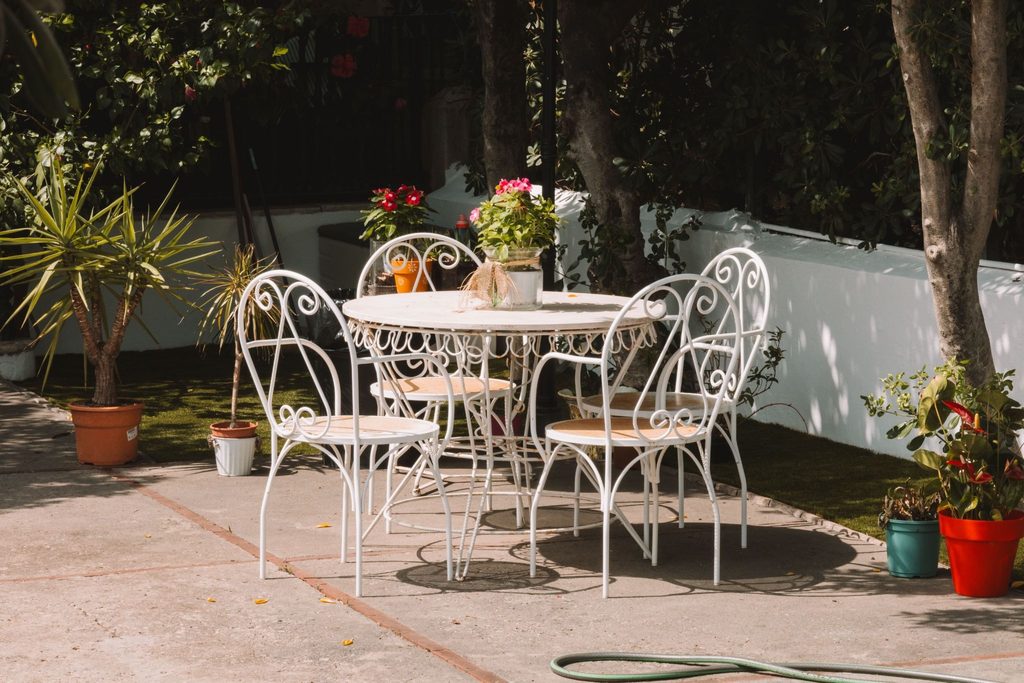
Wrought iron has become more selective. It doesn’t fit every project, but when it fits, it fits exceptionally well.
Traditional gardens, estate properties, and historically influenced architecture often benefit from the weight and presence that wrought iron provides. Few materials communicate permanence in quite the same way.
The maintenance requirements deserve attention. Unlike aluminum, wrought iron requires periodic care to help protect against rust and weather exposure.
For many clients, that’s a worthwhile tradeoff. The important thing is understanding the commitment before the specification is made.
Outdoor Fabrics and Cushions
Frame materials usually get most of the attention. Fabric deserves just as much.
A collection may look beautiful on installation day, but the long-term experience often comes down to the cushions and upholstery. That’s one reason performance fabrics have become so important.
Solution-dyed acrylic fabrics remain one of the strongest options available. They’re stain resistant, UV resistant, and designed to handle moisture without sacrificing appearance. Olefin fabric is another material worth considering.
Both perform exceptionally well outdoors and help preserve the comfort clients expect from high-quality outdoor furniture. It’s easy to focus on frames.
In reality, the cushions are often what people remember.
The right material often depends on more than aesthetics. We regularly help homeowners, designers, architects, and builders compare materials based on climate, maintenance requirements, and project goals. Get personalized guidance for your outdoor project.
Best Outdoor Furniture Materials for Pacific Northwest Weather
The Pacific Northwest is a great place to test outdoor furniture.
Between steady moisture, summer sun, tree cover, waterfront exposure, and the occasional freeze-thaw cycle, materials don’t stay anonymous for long. Some simply perform better here than others.
Here are the materials we find ourselves discussing most often:
Teak Wood
- Naturally resistant to moisture, rot, insects, and UV exposure
- Develops a silvery-gray patina over time
- Brings warmth and natural beauty to outdoor spaces
- Well suited to residential, hospitality, and waterfront projects
- Can last 25+ years with proper care
Powder Coated Aluminum
- Low-maintenance and weather resistant
- Naturally resistant to rust
- Performs well in moisture-heavy environments
- Available in a wide range of contemporary and transitional styles
- Typically requires little more than regular cleaning with mild soap and water
Marine-Grade Polymer (HDPE)
- Designed to resist moisture and harsh weather conditions
- Won’t rot, crack, or corrode
- Particularly well suited to waterfront and coastal properties
- Requires very little maintenance
- A strong option when durability is the highest priority
All Weather Wicker
- Adds texture and comfort to outdoor living spaces
- Resin wicker is engineered to resist moisture and UV fading
- Works particularly well for outdoor sofas and lounge seating
- Performance depends heavily on frame and fiber quality
- Best specified from manufacturers with strong construction standards
The right material often becomes obvious once you understand the environment. Moisture, UV exposure, waterfront conditions, and seasonal weather can all impact long-term furniture performance. Talk with our team about materials that perform well in your environment.
Where Outdoor Furniture Specifications Usually Go Wrong
Most specification issues come down to one of three things.
Prioritizing Appearance Over Performance
A collection can look beautiful in a presentation and still be the wrong fit for the project. The goal is balancing aesthetics with the realities of the environment you’re designing for.
Overlooking Maintenance Expectations
Not every client wants the same ownership experience.
Some appreciate the way teak evolves over time. Others want furniture that requires little more than occasional cleaning.
Making sure those expectations are aligned from the beginning helps avoid frustration later.
Focusing on Material Without Considering Construction
Material is only part of the story.
Frame construction, hardware, joinery, finish systems, and manufacturing quality all influence how furniture performs over time.
Two collections may use similar materials and deliver very different results. This is often where seeing collections in person becomes valuable.
Materials tell part of the story. Construction details, finishes, comfort, and scale are much easier to evaluate when you’re standing in front of the furniture rather than looking at it on a screen.
Frequently Asked Questions About Materials for Luxury Outdoor Furniture
What is the best material for outdoor furniture?
We get this question all the time, and the answer usually starts with the environment. Teak, powder coated aluminum, marine-grade polymer, and all weather wicker can all be excellent choices when they’re matched to the right project.
What is the most durable material for outdoor furniture?
If durability is the priority, teak usually ends up on the shortlist. It’s naturally resistant to moisture, insects, rot, and UV exposure, which is why it’s been trusted for outdoor applications for decades.
What is the most weather-resistant outdoor furniture?
Marine-grade polymer, teak, and powder coated aluminum are among the most weather resistant materials available. They perform well in moisture-heavy environments, direct sun, and changing weather conditions while requiring relatively minimal upkeep.
Is teak better than aluminum for outdoor furniture?
They solve different problems.
Teak brings warmth, natural beauty, and timeless appeal. Powder coated aluminum offers lower maintenance and greater flexibility for many contemporary projects. The right choice depends on the environment, design intent, and ownership expectations.
What is the best fabric for outdoor furniture?
Solution-dyed acrylic fabrics continue to be one of the strongest choices for outdoor applications. They are stain resistant, UV resistant, and designed to handle moisture without sacrificing appearance. Olefin fabrics are another strong option that performs particularly well outdoors.
What outdoor furniture material works best in rainy climates?
Teak, marine-grade polymer, and powder coated aluminum are all strong options for rainy climates. Each resists moisture well and performs reliably in wet environments.
What outdoor furniture material is best for coastal homes?
Coastal projects typically benefit from marine-grade polymer, premium teak, and high-quality aluminum collections. Salt air changes the specification conversation quickly, making material selection even more important.
Does aluminum outdoor furniture rust?
No. Aluminum is naturally resistant to rust, which is one reason it remains such a popular material for outdoor furniture. Most collections require little more than regular cleaning with mild soap and water.
What is the best outdoor furniture material for Pacific Northwest weather?
Teak, powder coated aluminum, and marine-grade polymer consistently perform well throughout the Pacific Northwest. The right choice depends on the level of exposure, maintenance expectations, and the goals of the project.
Ready to Compare Materials Side by Side?
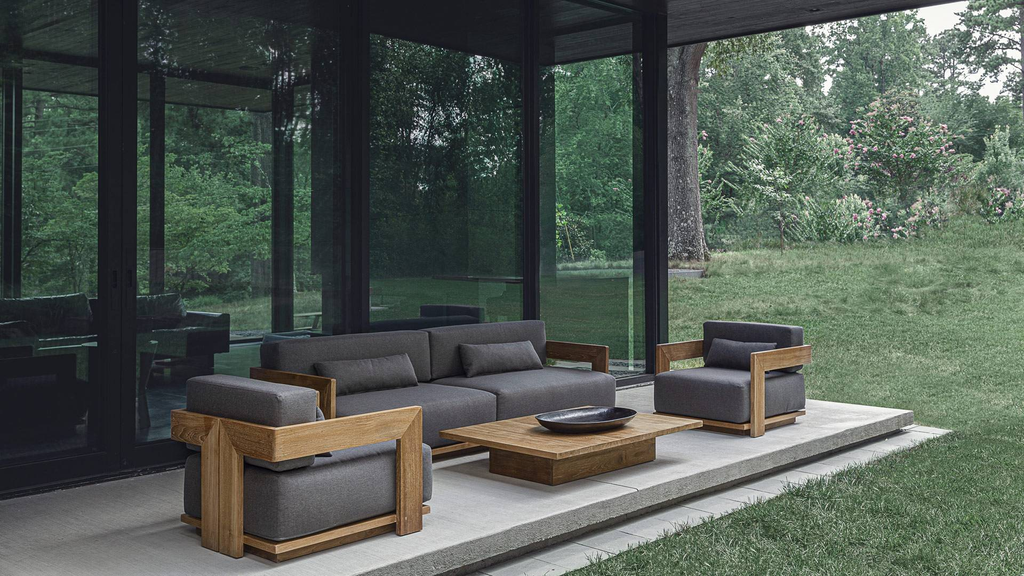
At a certain point, material conversations become easier in person.
You can compare teak to aluminum online. You can read about resin wicker and marine-grade polymer. But there’s a reason designers still visit showrooms.
The details become easier to evaluate when the materials are right in front of you.
If you’re working through a current project, we’d love to help. Swing by our Seattle or Portland showroom to compare collections, discuss project requirements, and explore materials side by side.
Not nearby? Reach out online.
Whether you’re comparing materials for a waterfront property, rooftop terrace, hospitality project, or residential outdoor space, we’re happy to help you evaluate options and narrow the field.
Sometimes a quick conversation is all it takes to bring clarity to the specification process.